Groundwater, Arsenic, and the Value of Staying with a Challenge
Prosun Bhattacharya
In this article
Prosun Bhattacharya, GSA International Distinguished Career Awardee 2025
I grew up in India, where groundwater is both lifeline and liability. Long before I had the language of geology to describe it, I understood what it meant for families to depend on handpumps and shallow wells. My formal education in geology and geochemistry at the University of Delhi provided a strong foundation in mineralogy, petrology, and geochemical processes. Doctoral work on the petrology and geochemistry of Proterozoic clastic metasediments from the Aravalli Supergroup deepened my interest in element mobility within geological systems, an interest that later translated naturally into groundwater chemistry. At KTH Royal Institute of Technology, this transition marked a shift from solid earth geochemistry to subsurface environmental systems, while retaining a strong emphasis on mineral water interaction and geochemical mechanisms. Within this setting, the work developed in a broader international framework through the coordination of the KTH International Groundwater Arsenic Research Group.
Moving to Sweden broadened my scientific perspective. Working in a setting where environmental research is closely linked to societal needs sharpened my interest in questions of public relevance. Water emerged as a central theme, not only as a geochemical system, but as a resource embedded in policy, infrastructure, and health.
My involvement with groundwater arsenic coincided with the emergence of the arsenic crisis in eastern India. During the late 1980s and early 1990s, elevated arsenic concentrations were identified in groundwater from the alluvial aquifers of West Bengal, overturning long-held assumptions about the safety of shallow tubewells. Investigations revealed the scale and complexity of the problem, linking arsenic occurrence to sedimentary geology and redox driven geochemical processes. Soon thereafter, arsenic contamination was also discovered across large parts of Bangladesh, with an even wider areal extent. The transboundary nature of the crisis underscored the need for sustained groundwater research and collaboration.
A decisive step came in late 1995, when a visit by Professor Debashis Chatterjee from the University of Kalyani brought the emerging groundwater arsenic problem directly to KTH. This encounter catalyzed systematic work on the geochemical mechanisms controlling arsenic mobilization in sedimentary aquifers. At the same time, we were investigating arsenic contaminated soils associated with wood preservation industries in Sweden, including soil washing methods for remediation. The coupling of industrial contamination studies with natural groundwater systems proved formative, allowing insights from engineered settings to inform process-based understanding under natural conditions.
Figure 1
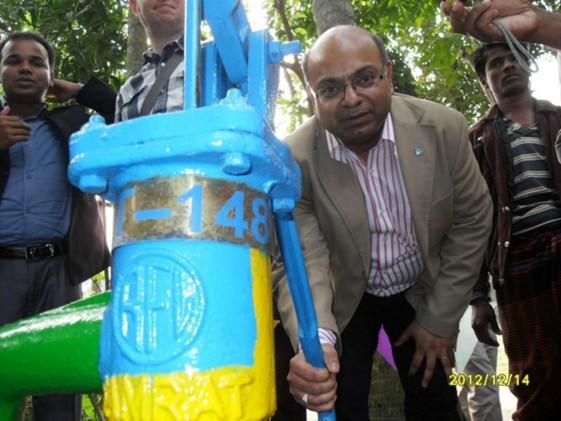
Figure 1. Commissioning of an arsenic-safe community tubewell under the SASMIT program in rural Bangladesh, illustrating the translation of groundwater science into sustainable drinking-water solutions with local partners and Sida support high-altitude basins.
An important element in this phase was the integration of graduate research across multiple levels. Early Master's thesis projects, supported through the Sida-funded Minor Field Studies program, including work by Maria Larsson and Andrea Leiss, enabled focused investigations in arsenic affected regions. This foundation was strengthened through doctoral research at KTH, including the PhD thesis of Mattias von Bromssen, which linked groundwater arsenic processes, sustainable aquifer use, and the emerging SASMIT framework. Parallel doctoral work by Professor M. Jakariya and Professor M. Aziz Hasan further reinforced this effort, advancing understanding of groundwater sustainability, arsenic mobilization, and mitigation pathways in sedimentary aquifer systems and helping to bridge process-based science with long-term sustainability goals. Complementary doctoral research at Wageningen University and research in the Netherlands extended this trajectory into treatment and control by addressing arsenic removal to concentrations below 1 microgram per liter.
As engagement in Bangladesh deepened, it became clear that arsenic mitigation could not rely on technology alone. Groundwater arsenic occurrence was spatially heterogeneous, socially embedded, and constrained by what communities were willing and able to adopt. This realization shaped the development of the Sustainable Arsenic Mitigation (SASMIT) approach, launched in 2008 as a Sida-supported action research initiative in Matlab, southeastern Bangladesh. A central scientific contribution of SASMIT was the validation of sediment characteristics, particularly sediment color, as indicators of aquifer redox conditions and arsenic risk. By linking simplified sediment color classes to groundwater chemistry, SASMIT translated tacit field knowledge into an operational tool for targeting arsenic safe aquifers.
Hydrogeological investigations further showed that, in specific geological settings, intermediate depth aquifers could provide water with low arsenic and low manganese concentrations. These intermediate deep tube wells, typically drilled to depths of around 120 m, offered a viable alternative to deeper tubewells, reducing costs while maintaining water quality. Their effectiveness depended on careful social and spatial planning using community surveys and social mapping. Together, these innovations provided arsenic safe drinking water to approximately 24,000 people at relatively low per capita cost.
Figure 2

Figure 2. Communicating groundwater quality investigations to the public during field-based arsenic studies, highlighting the role of geoscience in informing society.
From the outset, SASMIT was designed to inform policy and scale up. Collaboration with the Department of Geology at the University of Dhaka and national partners enabled translation of research outcomes into implementation pathways, culminating in a results-based management seminar in Dhaka in 2012. Subsequent partnerships with UNICEF and later engagements focused on capacity building, monitoring, and institutional uptake reinforced a central lesson that groundwater problems of this magnitude require continuity, trust, and long-term commitment.
Across these phases, long-term support from the Swedish International Development Cooperation Agency (Sida) played a decisive role. Sida’s sustained commitment to research, capacity building, and international collaboration enabled continuity across projects, institutions, and generations of students, making much of this work possible.
As arsenic research expanded across regions and disciplines, it became evident that no single field could address the problem in isolation. This recognition led to the establishment of the International Congress on Arsenic in the Environment in 2006 as a deliberate venture to create a sustained interdisciplinary forum for arsenic research and mitigation. Developed in close partnership with Professor Jochen Bundschuh, the Congress created a global platform linking geoscience with chemistry, engineering, health, and policy, and consolidating fragmented research into a coherent international dialogue.
In parallel, sustained engagement with GSA provided a disciplinary home for advancing arsenic research within the geoscience community. Over nearly two decades, topical sessions at GSA Connects served as forums for unraveling arsenic occurrence, mobilization, mitigation, governance, and emerging data driven approaches, while supporting early career researchers from affected regions.
Beyond South Asia, work in East Africa and Latin America provided important contrasts. In Tanzania and Rwanda, studies in volcanic and basement aquifer systems highlighted widespread fluoride contamination and health implications. In Bolivia, investigations in high-altitude semi-arid basins revealed arsenic mobilization controlled by salinity, evaporation, and hydroclimatic extremes. Across these settings, a consistent lesson emerged that sustainable groundwater solutions depend on integrating process-based geoscience with health considerations, local capacity, and long-term monitoring.
Receiving the GSA International Distinguished Career Award has prompted reflection rather than closure. If there is one lesson I would share, it is the value of staying with a challenge. Groundwater systems evolve slowly, and so does understanding. Progress emerges through persistence, by returning to the field, revisiting assumptions, and working alongside students and partners over decades.
Groundwater teaches patience. It integrates history, geology, and human action beneath the surface. As geoscientists, our responsibility is to make these hidden systems visible, understandable, and relevant to society. I am grateful to GSA for fostering an international community committed to science in service of the public good, and I am honored to share my story within that tradition.
Author Bio
Prosun Bhattacharya is professor of groundwater chemistry at KTH Royal Institute of Technology, Stockholm, Sweden, and a member of the KTH Digital Futures Faculty. He is Founder and Coordinator of the KTH International Groundwater Arsenic Research Group. His research focuses on the hydrogeochemistry of geogenic contaminants such as arsenic and fluoride, sustainable drinking-water treatment, and integrated groundwater quality management, with growing emphasis on geospatial analytics, AI-driven modelling, and digital twin approaches for groundwater decision support. He is engaged in Sida-supported capacity building and digital data management for groundwater monitoring and governance. Bhattacharya is a co-founder of the International Congress on Arsenic in the Environment and Founder and Executive Secretary of the International Society of Groundwater for Sustainable Development (ISGSD). He is a Fellow of the Geological Society of America and the International Water Association, and recipient of the GSA International Distinguished Career Award (2025) and the George Burke Maxey Distinguished Service Award (2021). He has served as Founding Editor-in-Chief of Groundwater for Sustainable Development and is an Associate Editor of the Journal of Hydrology. He served as Member-at-Large on the GSA International Committee (2021–2025) and as the standing International Section representative to the GSA Hydrogeology Division.
Figure 3
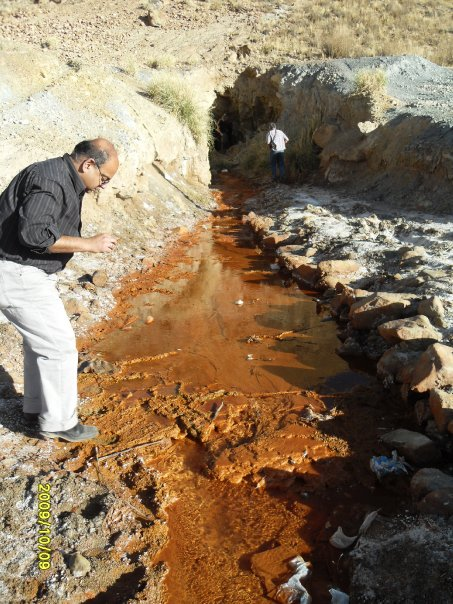
Figure 3.Field investigation of arsenic-rich surface and groundwater systems near Oruro, Bolivia, illustrating arsenic mobilization under arid and saline hydrogeological conditions in high-altitude basins.