What We Do
Science Policy
Initiatives and Change

Science Policy

GSA's Science Policy connects geoscience with public policy, supporting members, developing positions, promoting research that serves society, and providing newsletters, briefings, and fellowships.

The United States Capitol building under a blue, wispy sky.

Geoscience Congressional Visits Day

Participate in GEO-CVD to meet policymakers, advocate for geoscience, and contribute to national decision-making. Members have a direct opportunity to influence science policy.

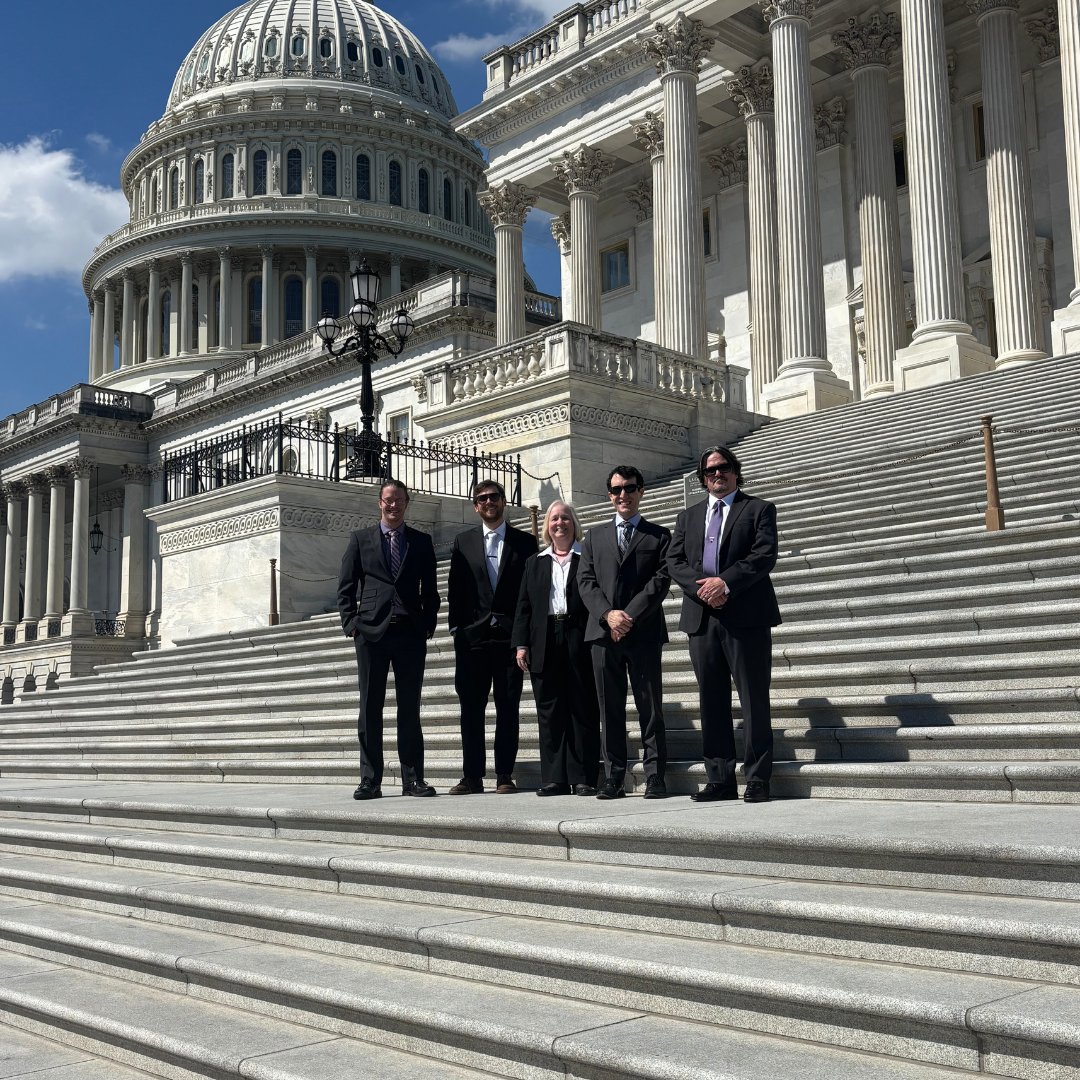
A group of people posing for a photo on the steps of the U.S. Capitol building

Solutions through Geoscience

GSA has partnered with NSF and the geoscience community to gather input and identify solutions to modern challenges.

Graphic with various words on it, including innvoation, success, geology & more

Geo-Innovation and Entrepreneurship

Accelerating Geoscience Impact to Society and the Economy

The information gathering period for this project has concluded.

Geoscience research underpins the solutions to many of society's most pressing challenges: climate change, clean energy, water and mineral resources, and resilience to natural hazards. Innovation and entrepreneurship are vital to increasing the impact of geoscience in addressing these challenges and engaging communities on resilience and sustainability.

In partnership with the National Science Foundation, GSA gathered input across disciplines and sectors within the geoscience community to nurture a thriving geo-innovation and entrepreneurial ecosystem focused on delivering tangible results for both society and the economy.

View of Earth from space showing Africa and Europe, with swirling clouds and blue oceans, set against the black backdrop of the cosmos.


Climate Change Solutions
Earth to Economy: Accelerating Innovation for Climate Change Solutions and Translational Research

With a grant from the National Science Foundation (NSF), the Geological Society of America (GSA) gathered input from the geoscience community to identify bold and creative ideas for translating scientific research to climate change solutions that can be implemented within a two- to three-year timeframe. Ideas focused on four specific questions.

GSA used multiple social media platforms to solicit feedback from its broad membership during the two-week comment period. A web platform was created to submit text and video answers to questions designed to elicit requested information. GSA also conducted targeted outreach to ensure the project received responses from students, early career professionals, groups underrepresented in the geosciences, multiple sub-disciplines and other stakeholders who might not be GSA members. Additionally online brainstorming sessions provided opportunities for in-person interactions and idea development.

GSA is grateful to its members and the broader community for their thoughtful input. The responses received illustrate the fundamental role of geoscience in understanding climate change and its impacts, sourcing needed materials for solutions, and designing effective mitigation, geoengineering, and adaptation measures. Geoscience will be critical to understanding the changing conditions that affect communities, such as water resources, agriculture, and extreme events, and developing mitigation measures, such as low-carbon energy sources and carbon capture and storage. Equitable partnerships and engagement with communities, particularly those most vulnerable to climate impacts, are needed. These efforts must be prioritized, valued, and funded, which requires a change in the culture and funding structure to be effective.

The American Geophysical Union, American Meteorology Society, and Society for Industrial and Applied Mathematics also submitted reports.

We look forward to sharing next steps on this page as they become available.

Diagonal split image features a flooded town, water splashing on hands, and a serene, expansive farmland under a pastel sky. Themes of water and agriculture.

GeoHealth Solutions

Impacts and Mitigation of Impacts on Human Health Due to a Changing Natural Environment

Geoscience and Human Health (GeoHealth)

With a grant from the National Science Foundation (NSF), the Geological Society of America (GSA) gathered input from the geoscience community to identify bold and creative ideas for translating scientific research to GeoHealth challenges.

GSA used multiple social media platforms to solicit feedback from its broad membership during the two-week comment period. A web platform was created to submit text and video answers to questions designed to elicit requested information. GSA also conducted targeted outreach to ensure the project received responses from students, early career professionals, groups underrepresented in the geosciences, multiple sub-disciplines and other stakeholders who might not be GSA members. Additionally online brainstorming sessions provided opportunities for in-person interactions and idea development. GSA is grateful to its members and the broader community for their thoughtful input.

The responses received illustrate the fundamental understanding that the health of Earth influences the health of humans. Human health intersects with all of Earth’s spheres: the lithosphere, hydrosphere, atmosphere, and biosphere. It is therefore essential that geoscientists, who analyze all of Earth’s spheres, partner with those in the health, epidemiological, and toxicological fields to maximize synergy in identifying, monitoring, communicating, and mitigating impacts on human health that occur through geologic processes.

GSA Logo
NSF Logo

Conversion Panel Background

Discover More

Stay updated on GSA News