
Opportunities and Challenges for Adaptive Reuse of Bauxite Residue for U.S. Critical Minerals Supply, Geohazard Reduction, and Land Restoration, Texas Gulf Coast, USA
J. Richard Kyle et al.
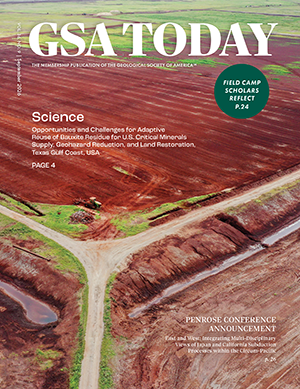
In this article
Authors
J. Richard Kyle*
Bureau of Economic Geology, Jackson School of Geosciences, University of Texas at Austin, Austin, Texas, 78758, USA
Jeffrey G. Paine
Bureau of Economic Geology, Jackson School of Geosciences, University of Texas at Austin, Austin, Texas, 78758, USA
Brent A. Elliott
Bureau of Economic Geology, Jackson School of Geosciences, University of Texas at Austin, Austin, Texas, 78758, USA
Tristan M. Childress
Bureau of Economic Geology, Jackson School of Geosciences, University of Texas at Austin, Austin, Texas, 78758, USA
Bridget R. Scanlon
Bureau of Economic Geology, Jackson School of Geosciences, University of Texas at Austin, Austin, Texas, 78758, USA
Abstract
Driven by the U.S. government’s recent emphasis on finding domestic sources of critical minerals, bauxite residue stored in the middle Texas coastal region is being assessed for its potential to be reprocessed for metals recovery and other useful materials. Reconnaissance studies of the Copano bauxite residue (CBR) have evaluated its physical, chemical, and mineralogical character toward its adaptive reuse. CBR is enriched in rare earth elements (REE) and other technology-critical elements with a total REY (REE + Y) of ~2000 ppm.
Before adaptive reuse of CBR can proceed, the storage beds should be systematically sampled to produce a viable resource model that accounts for natural ore and processing variations, mechanical filling of residue sites, and the possibility of element remobilization after storage. The potential benefits of adaptive use of bauxite residue are amplified in storage locations like the Texas coast where the sites are subject to tropical cyclones, as well as effects related to long-term relative sea-level rise. Bulk CBR conversion into useful products would reduce the volume of stored waste in environmentally sensitive locations, allowing restoration of storage sites for other purposes. This opportunity will require various stakeholders to collaborate and form a holistic plan for adaptive CBR reuse, thus restoring these sites for the future good of the site holder, local community, and coastal environment.
* rkyle@jsg.utexas.edu
CITATION: Kyle, J.R., et al., 2026, Opportunities and Challenges for Adaptive Reuse of Bauxite Residue for US Critical Minerals Supply, Geohazard Reduction, and Land Restoration, Texas Gulf Coast, USA: GSA Today, v. 36, p. 4–12, https://doi.org/10.1130/GSATG616A.1.
© 2026 The Authors. Gold Open Access: This paper is published under the terms of the CC-BY-NC license. Printed in the USA.
Introduction
Critical minerals play key roles in modern technology, including in the transition to a low-carbon energy future. Among these are the rare earth elements (REE) that serve essential applications in military and industrial uses, such as magnets for wind turbine motors. U.S. import reliance on REE from foreign sources underscores the need to develop domestic REE sources for national security and economic development. Various federal agency initiatives, including the U.S. Department of Energy Carbon Ore, Rare Earth, and Critical Minerals (CORE-CM) Initiative for U.S. Basins and the U.S. Geological Survey (USGS) Earth Mineral Resources Initiative, have promoted the evaluation of mining and processing waste for critical minerals recovery. The objective of this study is to explore the issues related to REE and other critical minerals production from expatriated bauxite residue in the U.S. Gulf Coast region.
Aluminum (Al), the second most widely used metal in global society, has long had key industrial and commercial roles, notably in civilian and military aircraft, and other uses where high strength versus weight are important considerations. Fortunately, aluminum is an abundant element, forming 7–8% of continental crust, with the Al-enriched soil, bauxite, being the source of most commercial ores. The process of making Al metal consists of three major steps: (1) mining of bauxite ore; (2) production of alumina (Al2O3) from bauxite via the Bayer process; and (3) reduction of alumina by the Hall-Heroult process to form Al metal (Tabereaux and Peterson, 2014). Due to geologic and economic factors, these three steps commonly take place in separate locales, giving rise to an extensive and complex global supply chain. The waste product from the Bayer process, commonly referred to as bauxite residue, or “red mud,” is the focus of this study. Bauxite residue is commonly alkaline (average pH 11.3; Gräfe et al., 2011) due to residual NaOH from the Bayer process.
Given the global demand for aluminum, an estimated 80 active and 50 legacy alumina plants exist worldwide (Power et al., 2011). Annual production of bauxite residue is estimated to be 140–150 Mt, with repurposing of the waste being <3%, despite more than 1200 patents filed for bauxite residue uses. The total global amount of stored bauxite residue is estimated to be ~4 Gt. Given the ever-growing volume of this waste, secondary uses need to be expanded (Klauber et al., 2011; Borra et al., 2016; Evans, 2016; Verma et al., 2017; Chen and Peng, 2023, and references therein). Uses for bauxite residue in the United States have not been approved (EPA, 2023) despite historic evaluation (Parekh and Goldberger, 1976).
With the recent push by the U.S. government to find domestic sources of critical minerals, the potential of bauxite residue to be converted into useful materials is being reassessed. Previous studies of bauxite residue have shown elevated values of REE, as the majority of REE and other metals remain in the bauxite residue during the Bayer process (Davris et al., 2016; Reid et al., 2017; Narayanan et al., 2018; Pietrantonio et al., 2021; Swain et al., 2022; Wang et al., 2022). Existing data for bauxite and its wastes indicate element enrichment during the Bayer process, largely by the reduction in volume resulting from the removal of alumina from the processed bauxite. Bauxite residue has been converted into useful construction materials in some sites, suggesting the potential for reduction of the total stored waste (Jitsangiam and Nikraz, 2013; Dodoo-Arhin et al., 2017).
Texas produced alumina from foreign-sourced bauxites from 1953 until 2016 at refinery locations in the middle Texas coast at Point Comfort and near Corpus Christi (Fig. 1). Total processed bauxite is estimated to be ~320 Mt, producing an estimated 160 Mt of bauxite residue at these Texas sites (NMIC, 2024, 2026).
This investigation is concerned primarily with the Copano Enterprise LLC bauxite residue storage site in Aransas and San Patricio counties, Texas, which received waste from the Sherwin plant ~12 km south (ACVF, 2022) from processed Jamaican bauxite. Four bauxite residue impoundments, termed Beds 1 through 4, totaling ~3,100 acres (1,255 ha; Fig. 2), were developed on an 11,000-acre (4,450 ha) tract. Bed 1 began to receive bauxite residue in 1968, Bed 2 in 1972, and Bed 3 in 1978 (CE Ranch, 2023; TCEQ, 2020b).
Figure 1

Geologic setting of the Texas coastal region. (A) Geologic map of the Texas coastal zone showing study area. (B) Digital elevation model for the middle Texas coast showing bauxite residue storage sites. Modified from Paine et al. (2016).
Geologic Setting
The study area lies within the middle Texas Gulf Coast adjacent to the Gulf of America (Fig. 1). The Texas coastal plain consists of a Cenozoic sedimentary succession built dominantly of siliciclastic sediments supplied by ancestral fluvial systems. The modern coastal architecture is the result of complex land-water interactions related to rising sea level since the last glacial maximum (~18 Ka), with barrier islands fronting shallow bays that occupy drowned Pleistocene river valleys. The surface geologic unit in the study area is the upper Quaternary Beaumont Formation (Paine et al., 2025a, 2025b) on which the bauxite residue storage beds are built (Fig. 2; Golder Associates Inc., 2019; TCEQ, 2020a).
The principal study area is peripheral to the southwestern portion of Copano Bay, adjacent to Port Bay, a narrow coast-parallel inlet (Figs. 1 and 2). The land surface rises gently to the northwest, reaching an elevation of 20 m MSL ~50 km from the coast (Fig. 1B). Landscape changes related to nearly annual tropical storms or hurricanes are fundamental to the geological processes in this region, including high winds, storm surges, and extreme precipitation rates and amounts. Annual precipitation in the Corpus Christi region ranged from 310 to 1190 mm from 2000 through 2022 (average 780 mm/yr; NOAA, 2023) and is greatly affected by tropical storm and hurricane events that may result in 250+ mm of precipitation in a single event. Nine monthly totals of 250+ mm have been recorded in the past 20 years, with a maximum monthly total of 460 mm. Tidal gauge studies indicate relative sea-level rise of ~10 mm/yr for the middle Texas coast since the 1940s (Paine et al., 2017)
Figure 2

Copano Enterprise bauxite residue storage site. (A) Aerial view of storage site, looking east, with Bed 1 in foreground. Port Bay and the Rockport, Texas, area are in the distance. (B) Location map of bauxite residue storage beds and schematic section of Bed 3, including the underlying geologic units. Modified from Golder Associates, Inc. (2019), with the bauxite residue information based on processing of NOAA data (https://coast.noaa.gov/dataviewer). (C) Elevation map of Bed 3 and surrounding dike from UT BEG lidar survey flown in 2014.
Materials and Methods
A 10-kg sample of Copano bauxite residue (CBR) from Bed 3 was used for these initial studies. An archival sample of bauxite (BEL2), collected in 1973 from the Belmont mine, was analyzed to allow comparison with processed CBR. Unless otherwise indicated, analytical studies were conducted using facilities at the University of Texas at Austin Jackson School of Geosciences. Chemical analysis was conducted by Bureau Veritas Ltd., following soils protocols. See the Supplemental Material1 for analytical details.
1 Supplemental Material. Additional methodology and results; 3D model animation. Please visit https://doi.org/10.1130/GSAT.S.33266115 to access the supplemental material; contact editing@geosociety.org with any questions.
Results
Bed 3 Character and Volumetrics
Bed 3 is an irregular polygon, with the eastern and northeastern sides constrained by the proximity of Port Bay (Fig. 2). Bed 3 is the smallest (~1.5 km2) of the four Copano residue storage beds and is surrounded by containment dikes that extend to ~9 m MSL. Based on historic topographic maps and lidar data for the contiguous surface, the elevation of the original surface was ~2 m MSL. The irregular surface of Bed 3 fill is ~6 m MSL (Fig. 2B) with a variable interior standing water zone.
Using an estimate of the average CBR thickness of 3.5 m, a volume of ~5.4 million m3 is indicated. Of critical importance for mass conversion, the density of bauxite residue is not well constrained, with values ranging from 2.85 to 5.3 t/m3 being used in other studies. The overall iron content of CBR indicates a relatively high density. For the density range above, the range of the CBR mass would be between ~15.4 and 28.6 Mt. Density values for dry Jamaican bauxite residue were reported to range from 3.15 to 3.73 by Wagh and Pinnock (1987). Given the likelihood of a higher average thickness than 3.5 m, we feel that a conservative resource estimation of 20 Mt for Bed 3 CBR is appropriate. Using these same metrics, Copano Beds 1 and 2 (Fig. 2) may contain a total of ~100 Mt of bauxite residue.
Physical Character of Bauxite Residue
The CBR consists of distinctly red, fine-grained sediments with enough moisture to maintain an in situ plastic consistency. High resolution X-ray computed tomography (XCT) was utilized to gain a better understanding of the CBR components. CBR consists of: (1) natural “resistate” mineral grains that remained unaffected by the Bayer process; (2) synthetic minerals created during the Bayer reactions; (3) unreacted NaOH reagent; and (4) a fluid in pores possibly affected by surface fluid infiltration or mineral reactions over 20+ years in storage.
Theoretical X-ray attenuation values for likely CBR components were used to bin the results and to interpret the possible components (see Fig. S2; Table S4; Model S1). The lowest attenuation features are irregular blobs that comprise ~0.75% of the scanned volume and are interpreted to be fluid-filled pores (Fig. 3A). The presence of a fluid phase was confirmed by recovery of a pH 10.5 fluid by centrifuging CBR. The matrix overall has a mottled appearance with some relatively lighter greyscale blobs. Given the high iron content of the bauxite residue, it is perplexing that the high-attenuation iron oxide phases are not more distinctive. A tentative interpretation is that the red mud has been homogenized by multiple processing steps as to mix higher and lower attenuating phases at the subvoxel scale (<2.6 µm). Thus, the matrix consists of intimately mixed components, likely dominated by mixed Fe and Al oxyhydroxides, plus sodalite. The two higher attenuating bins (Figs. 3B and 3C) consist of distinct bladed grains which are compatible with hematite, ilmenite, rutile, etc. However, these high-attenuating phases total <0.25% of the scanned volume, which would be anomalously low for Ti phases in Jamaica bauxite and residue (2–5% range; Wagh and Pinnock, 1987).
Figure 3

Petrography of Copano Bed 3 bauxite residue (CBR). (A) X-ray computed tomography (XCT) frames from 3-D model with all mineral phases rendered transparent except the fluid-filled pores (blue). (B) XCT frames with all phases rendered transparent except higher attenuation grains (yellow). (C) XCT frames with all phases rendered transparent except highest attenuation grains (red). See animated model (Model S1; see text footnote 1). (D) Energy dispersive X-ray spectroscopy (EDS) elemental composite map of resistate grains (ca—calcite; qz—quartz) and chemical compounds in Fe-Al oxyhydroxide matrix. (E) X-ray EDS map of zircon and quartz grains in CBR matrix. All images are false color.
Chemical Composition of Bauxite Residue
A summary of CBR chemistry from this study (Fig. 4; Table S2) is compared with published data for Jamaican red mud (Wagh and Pinnock, 1987), as well as a general metric provided by average continental crust (Rudnick and Gao, 2003). Major and trace element chemistry, including REE and other critical elements, were assessed. These results are compared with an archival Jamaican bauxite sample broadly representative of the bauxite that was processed to produce the CBR. The data set for systematic bauxite residue samples from storage sites adjacent to alumina plants in Jamaica (Wagh and Pinnock, 1987) allow assessment of variables that are not presently possible for CBR.
The major chemical components of Jamaican bauxites (Wagh and Pinnock, 1987; Lalor, 1995) are representative of lateritic soils developed from an Fe-bearing volcanic protolith, as interpreted for the origin of Jamaica bauxite (Comer, 1974). Al2O3 is the dominant component (>40%), as required for a commercial Al source, along with a low SiO2 (~1%) content. Iron is the second highest metal component (~20% Fe2O3); more than 25% of the sample is LOI, presumably largely related to Al and Fe oxyhydroxides. TiO2 is the range of 2–5% due to various Ti minerals; P2O5 approaches 1%.
Focusing primarily on the more concentrated critical minerals in CBR, Zr, Ni, V, and Zn contents are 1582, 477, 800, and 221 ppm, respectively. Nb, Co, and Ga are 116, 66, and 61 ppm, respectively. Given the current emphasis on the REE supply chain, the total REE and REY contents are 1492 and 1989 ppm, respectively (Table S2). The collective REE enrichment of CBR is more than 12 times average continental crust, with Y being enriched more than 20 times (Fig. S1). Even so, REE data reported for Jamaica red mud by Wagh and Pinnock (1987) were 30–70% higher than the CBR REE analyses (Table S2), cf. total REE values of 2145 ppm, even though this total represents only nine of the REE. Many REE (La, Ce, Pr, Nd, Eu, Gd, Tb, Dy) in CBR appear to show residual enrichment related to the reference Jamaica bauxite sample (Table S2). However, other heavy REE (Ho, Er, Tm, Yb, Lu), as well as Y, seem to show anomalous higher enrichment.
CBR predictably has similarities to the likely source bauxite (Fig. 4). Considering the reference BEL2 bauxite sample, the CBR represents material left after reduction of the original Al2O3 content by ~60% during the Bayer process. Many trace elements (Ba, Ga, Mo, Zn) seem to show residual behavior, and some (Co, Hf, Nb, Sn, Ta) show enrichment, at least with respect to the BEL2 sample.
Figure 4

Major and trace element concentrations of Bed 3 CBR (yellow), archival Jamaican bauxite sample (BEL2; red), and calculated concentrations after 60% removal of Al2O3 from BEL2 (green). Color coding is consistent across all panels. Designated critical minerals are marked with an asterisk. BDL—below detection limit. Preliminary X-ray fluorescence (XRF) analyses (Table S1; see text footnote 1) provided guidance for further studies. (A) Major and minor elements (wt %). (B) Sc, Y, and REE (ppm) of studied samples compared with published data for bauxite residue in Jamaica (brown, tan) and with average continental crust (dashed dark green). (C) Trace element concentrations (ppm).
Mineral Composition
Powdered CBR samples and of the archival Jamaica bauxite were analyzed by X-ray diffraction, producing quantitative modal mineralogy (Table S3). The bauxite sample results confirmed the major mineral assemblage for Jamaican bauxite defined by other studies (e.g., Wagh and Pinnock, 1987). The predicted result of the Bayer process is apparent, cf. reduction of the alumina content minerals and an increase of the resistate components.
SEM reconnaissance of CBR generated a better understanding of textural and component features (Figs. 3D and 3E). Residual Al-Fe oxyhydroxides, as well as resistate minerals quartz, zircon, and titanium (±Fe) oxides are present. REE-bearing phases were detected in association with Ba-rich grains, suggesting relative enrichment of the heavy REE which affects economic potential (Fig. 4). Further work remains to characterize the REE occurrences (e.g., Vind et al., 2018).
Discussion
This study has provided multiple new types of information on CBR, including concentrations of a previously unavailable broad suite of critical minerals. A key aspect is the initiation of a holistic study of waste materials stored in a coastal site toward its possible contributions to the U.S. critical mineral supply, while restoring the storage site for other purposes. This general assessment suggests that CBR Bed 3 has a total REY resource of ~30 Kt; for comparison, the total U.S. REE consumption for 2024 was estimated to be 9.0 Kt (Johnson, 2026), although these numbers are not directly comparable as individual REE are variably desirable and valued.
These pilot studies support the potential of bauxite residue as a critical minerals resource. If the overall REY concentrations of ca. 2000 ppm can be demonstrated for the CBR, it would compare favorably with other source materials being evaluated for REE recovery. For other elements, a considerable amount of Al and Fe remain in the residue (Fig. 4; Table S2). Fe oxides might be suitable for other processes that require an Fe component (e.g., cement manufacture). Several critical minerals, in addition to REY, could be evaluated for potential recovery from bauxite residue, notably Ti, V, Sc, and perhaps others. Pilot studies for various critical minerals recovery processes from bauxite residue have been conducted (e.g., Davris et al., 2016; Verma et al., 2017; Narayanan et al., 2018; Pietrantonio et al., 2021; Swain et al., 2022; and many others).
It is beyond the scope of this study to review nonmetal uses of bauxite residue, and the reader is referred to recent reviews, including Evans (2016), who stated that applications for bauxite residue that have been “evaluated and trialed [cover] almost all of inorganic material science.” However, for the desired reduction of stored bauxite residue in coastal Texas, the bulk of the mass needs to be converted into useful materials. Some of the most effective uses have been for construction purposes, including concrete, road and dam/levee construction, building panels, bricks, foamed insulating bricks, tiles, etc. Complementary aspects of its high iron oxide content have encouraged its use as a pigment, and bauxite residue has been evaluated as a low-weight drilling fluid additive (AlBoraikan et al., 2023). In the energy transition realm, Fe oxides could play a role in CO2 capture (Mendoza et al., 2019) and in H2 production (Damma and Smirniotis, 2018). Bauxite residue’s alkaline nature also allows its use in the treatment of acid mine drainage and soil amelioration (Evans, 2016).
It is also important to consider uses specific to the CBR regional setting, as significant transportation of bauxite residue or its products would likely be cost prohibitive. Coastal Texas is an active residential, industrial, and commercial setting with significant ongoing construction activity traditionally related to petroleum exploration, production, and refining. Additional developments, ranging from wind and solar energy operations and CO2 sequestration facilities to desalination plants and space ports, require major construction projects and materials. Rising sea level, land subsidence, and frequent tropical cyclones have encouraged developments to harden Texas coastal infrastructure, including proposals for massive projects such as the U.S. Army Corps of Engineers Coastal Texas Project (successor to the “Ike Dike,” Merrell et al., 2010), which has progressed to the design phase (Coastal Texas Project, 2023).
The demand for construction materials for regional projects and critical minerals for domestic technology and security purposes is clear. For Texas bauxite residue to contribute to these supplies has many challenges, starting with the economic evaluation of these resources. Before any resource-containing body can be considered for potential commercial extraction, systematic evaluation involving detailed sampling to establish the third dimension is required. The unconsolidated and alkaline nature of the red mud storage areas provides a challenge even to collect the required samples. Studies of long-term bauxite residue storage sites in Jamaica showed systematic increase of REE concentrations with depth, leading Wagh and Pinnock (1987) to suggest that REE were being mobilized in the alkaline fluids. This situation demonstrates the necessity of systematic sampling and analysis of any waste storage site.
Assuming this can be done to allow the development of a physical and economic block model of the mass, then the polymetallic character of the material would need to be assessed to see which critical minerals might be recovered economically. A mining plan and a processing plant would need to be developed and constructed, assuming suitable financing can be acquired for the enterprise. Fundamental to the holistic success of the adaptive reuse plan for the CBR storage area is a plan to develop uses for the “common” waste materials that will likely constitute 90+% of the material being handled. The Texas Commission on Environmental Quality (TCEQ) classifies bauxite waste as an industrial solid waste that is “Bevill exempt” (non-hazardous waste; E. Wehner, TCEQ Remediation Division, written commun., August 2022). The regulations concerning reuse of nonhazardous waste are available via the Texas Administrative Code Regulatory Guidance RG-240 (TCEQ, 2022).
Conclusions
This reconnaissance investigation of CBR has confirmed that it is enriched in REE and other critical elements and that it comprises a significant tonnage of a resource suitable for economic evaluation. Natural ore and processing variations require that any storage bed be systematically sampled to allow the development of a resource model. Further, the availability of representative bauxite residue samples would facilitate evaluation of the suitability of bulk bauxite residue to be converted into useful products to allow for reduction of the stored waste in environmentally sensitive locations and restoration of the storage site.
If collective incentives can be established, then the existing regulations of local, state, and federal agencies would need to be utilized to allow responsible adaptive reuse of this designated industrial waste. Further, if the domestic minerals supply from this type of material is deemed “critical”, then federal policies and incentives may be leveraged to bring this domestic supply to the market. The primary challenge will be for the various stakeholders to work together and form a holistic plan for adaptive reuse of the bauxite residue while restoring the storage site for the future good of the site holder, the local community, and the Texas coastal environment.
Acknowledgments
Financial support was provided by State of Texas Advanced Resource Recovery program through the Mineral Resource Program of the Bureau of Economic Geology, the U.S. Department of Energy CORE-CM program, and by the III Yager Professorship (RK) of the Jackson School of Geosciences. We thank Eleanor Wehner of TCEQ for information concerning Texas regulation of industrial wastes. We thank ALCOA for supplying bauxite residue for the study and for manuscript review. Manuscript review by Josh Feinberg improved the final presentation.
We are grateful to our Jackson School of Geosciences colleagues for sharing their technical expertise: J. Andrews for aerial photography, P. Orlandini for XRD analysis, E. Sivil for XRF analysis, S. Elliott for SEM imaging, R. Darvari and J-P. Nicot for aqueous geochemistry, J. Maisano and M. Colbert for XCT scans and visual products, and S. Short for lidar analysis.
References Cited
- AlBoraikan, R., Bageri, B., and Solling, T.I., 2023, Innovative applications of red mud: Converting an environmental challenge to a drilling asset: ACS Omega, v. 8, p. 614–625, https://doi.org/10.1021/acsomega.2c05755.
- Aransas Community Values Fund (ACVF), 2022, Copano site (Beds 1–4): Findings of environmental assessments: https://aransascvf.com/wp-content/uploads/2022/01/Copano-APAR-Presentation-Public-Meeting-Final-12-15-20-Highlighted.pdf (accessed June 2023).
- Borra, C.R., Blanpain, B., Pontikes, Y., Binnemans, K., and van Gerven, T., 2016, Recovery of rare earths and other valuable metals from bauxite residue (red mud): A review: Journal of Sustainable Metallurgy, v. 2, p. 365–386, https://doi.org/10.1007/s40831-016-0068-2.
- Chen, J., and Peng, D., 2023, Management and disposal of alumina production waste, in Qi, C., and Benson, C.H., eds., Managing Mining and Minerals Processing Wastes: Concepts, Design, Applications: Amsterdam, Elsevier, p. 133–163, https://doi.org/10.1016/B978-0-323-91283-9.00007-9.
- Coastal Texas Program, 2023, About the Project: https://coastaltexasprogram.com/about/.
- Comer, J.B., 1974, Genesis of Jamaican bauxite: Economic Geology, v. 69, p. 1251–1264, https://doi.org/10.2113/gsecongeo.69.8.1251.
- Copano Beds (CE Ranch), 2023, Impoundments: https://www.copanobeds.com/impoundments/.
- Damma, D., and Smirniotis, P.G., 2018, Recent advances in iron-based high-temperature water-gas shift catalysis for hydrogen production: Current Opinion in Chemical Engineering, v. 21, p. 103–110, https://doi.org/10.1016/j.coche.2018.09.003.
- Davris, P., Balomenos, E., Panias, D., and Paspaliaris, I., 2016, Leaching rare earth elements from bauxite residue using Brønsted acidic ionic liquids, in Borges de Lima, I., and Filho, W.L., eds., Rare Earths Industry: Technological, Economic, and Environmental Implications: Amsterdam, Elsevier, p. 183–197, https://doi.org/10.1016/B978-0-12-802328-0.00012-7.
- Dodoo-Arhin, D., Nuamah, R.A., Agyei-Tuffour, B., Obada, D.O., and Yaya, A., 2017, Awaso bauxite red mud-cement based composites: Characterization for pavement applications: Case Studies in Construction Materials, v. 7, p. 45–55, https://doi.org/10.1016/j.cscm.2017.05.003.
- Environmental Protection Agency (EPA), 2023, TENORM: Bauxite and Alumina Production Wastes: https://www.epa.gov/radiation/tenorm-bauxite-and-alumina-production-wastes (accessed June 2024).
- Evans, K., 2016, The history, challenges, and new developments in the management and use of bauxite residue: Journal of Sustainable Metallurgy, v. 2, p. 316–331, https://doi.org/10.1007/s40831-016-0060-x.
- Golder Associates, Inc., 2019, Preliminary Groundwater Assessment Report, 542 p.: https://www.copanobeds.com/wp-content/uploads/2020/01/Preliminary-Groundwater-Assessment-Report_May_2019.pdf (accessed June 2024).
- Gräfe, M., Power, G., and Klauber, C., 2011, Bauxite residue issues: III. Alkalinity and associated chemistry: Hydrometallurgy, v. 108, p. 60–79, https://doi.org/10.1016/j.hydromet.2011.02.004.
- International Aluminum Institute (IAI), 2015, Bauxite Residue Management: Best Practice, 31 p.
- Jitsangiam, P., and Nikraz, H., 2013, Sustainable use of coarse bauxite residue for alternative roadway construction materials: Australian Journal of Civil Engineering, v. 11.
- Johnson, S.N., 2026, Rare Earths: Mineral Commodity Summaries, U.S. Geological Survey: https://pubs.usgs.gov/periodicals/mcs2026/mcs2026-rare-earths.pdf (accessed June 2023).
- Klauber, C., Gräfe, M., and Power, G., 2011, Bauxite residue issues: II. Options for residue utilization: Hydrometallurgy, v. 108, p. 11–32, https://doi.org/10.1016/j.hydromet.2011.02.007.
- Lalor, G., 1995, A Geochemical Atlas of Jamaica: Kingston, Jamaica, University of the West Indies, Canoe Press, 82 p.
- Mendoza, E.Y.M., Santos, A.S., López, E.V., Drozd, V., Durygin, A., Chen, J., and Saxena, S.K., 2019, Iron oxides as efficient sorbents for CO2 capture: Journal of Materials Research and Technology, v. 8, https://doi.org/10.1016/j.jmrt.2019.05.002.
- Merrell, W.J., Reynolds, L.G., Cardenas, A., Gunn, J.R., and Hufton, A.J., 2010, The Ike Dike: A coastal barrier protecting the Houston/Galveston region from hurricane storm surge, in Badescu, V., Cathcart, R., eds., Macro-engineering Seawater in Unique Environments. Environmental Science and Engineering: Berlin, Springer, https://doi.org/10.1007/978-3-642-14779-1_31.
- Narayanan, R.P., Ma, L.-C., Kazantzis, N.K., and Emmert, M.H., 2018, Cost analysis as a tool for the development of Sc recovery processes from bauxite residue (red mud): ACS Sustainable Chemistry & Engineering, v. 6, https://doi.org/10.1021/acssuschemeng.8b00107.
- National Minerals Information Center (NMIC), 2024, Bauxite and Alumina - Historical Statistics (Data Series 140): U.S. Geological Survey, https://www.usgs.gov/media/files/bauxite-and-alumina-historical-statistics-data-series-140.
- National Minerals Information Center (NMIC), 2026, Minerals Yearbook - Metals and Minerals: U.S. Geological Survey, https://www.usgs.gov/centers/national-minerals-information-center/minerals-yearbook-metals-and-minerals.
- National Oceanographic and Atmospheric Administration (NOAA), 2023, Online Weather Data, Monthly total precipitation for Corpus Christi Area, TX: https://www.weather.gov/wrh/Climate?wfo=crp (accessed June 2023).
- Paine, J.G., Caudle, T., and Andrews, J.R., 2016, Shoreline movement in the Copano, San Antonio, and Matagorda Bay systems, central Texas Coast, 1930s to 2010s: Contract Report, Bureau of Economic Geology, University of Texas at Austin, 72 p.
- Paine, J.G., Caudle, T.L., and Andrews, J.R., 2017, Shoreline and sand storage dynamics from annual airborne lidar surveys, Texas Gulf Coast: Journal of Coastal Research, v. 33, p. 487–506, https://doi.org/10.2112/JCOASTRES-D-15-00241.1.
- Paine, J.G., Collins, E.W., and Caudle, T.L., 2025a, Matagorda Formation—A new Holocene coastal stratigraphic unit, Texas, in Orndorff, R.C., Stamm, N.R., and Soller, D.R., eds., Stratigraphic Notes—Volume 2, 2025: U.S. Geological Survey Professional Paper 1879–2, 16 p., https://doi.org/10.3133/pp1879v2.
- Paine, J.G., Collins, E.W., Costard, L., Grunau, B.A., Morris, J.N., and Caudle, T.L., 2025b, Geologic map of the Copano Bay area, Texas Gulf Coast: University of Texas at Austin, Bureau of Economic Geology, Open-File Map 308, scale 1:62,500.
- Parekh, B.K., and Goldberger, W.M., 1976, An assessment of technology for the possible utilization of Bayer process muds: U.S. Environmental Protection Agency EPA/600/2–76–301, Environmental Protection Technology Series, Washington, D.C.
- Pietrantonio, M., Pucciarmati, S., Torelli, G.N., D’Aria, G., Forte, F., and Fontana, D., 2021, Towards an integrated approach for red mud valorization: A focus on titanium: International Journal of Environmental Science and Technology, v. 18, p. 455–462, https://doi.org/10.1007/s13762-020-02835-5.
- Power, M., Gräfe, C., and Klauber, C., 2011, Bauxite residue issues: I. Current management, disposal and storage practices: Hydrometallurgy, v. 108, p. 33–45, https://doi.org/10.1016/j.hydromet.2011.02.006.
- Reid, S., Tam, J., Yang, M., and Azimi, G., 2017, Technospheric mining of rare earth elements from bauxite residue (red mud): Process optimization, kinetic investigation, and microwave pretreatment: Scientific Reports, v. 7, https://doi.org/10.1038/s41598-017-15457-8.
- Rudnick, R.L., and Gao, S., 2003, Composition of the continental crust, in Holland, H.D., and Turekian, K.K., eds., Treatise on Geochemistry (v. 3): Amsterdam, Elsevier, p. 1–64.
- Swain, B., Lee, C.G., and Park, J.R., 2022, Assessment of bauxite residue as secondary resource for rare earth metal and valorization challenges: A perspective: Resources, Conservation & Recycling Advances, v. 14, https://doi.org/10.1016/j.rcradv.2022.200078.
- Tabereaux, A.T., and Peterson, R.D., 2014, Aluminum production, in Seetharaman, S. ed., Treatise on Process Metallurgy: Amsterdam, Elsevier, p. 839–917, https://doi.org/10.1016/B978-0-08-096988-6.00023-7.
- Texas Commission on Environmental Quality (TCEQ), 2020a, Affected Property Assessment Report: Copano Enterprises LLC, 2919 p.: https://www.copanobeds.com/wp-content/uploads/2022/03/Affected_Property_Assessment_Report_June_2020.pdf (accessed August 2026).
- Texas Commission on Environmental Quality (TCEQ), 2020b, Virtual Public Meeting: Copano Site (Beds 1–4): Findings of Environmental Assessments, 20 p.: https://www.copanobeds.com/wp-content/uploads/2020/12/Copano-APAR-Presentation-Public-Meeting-Final-12-15-20.pdf (accessed August 2026).
- Texas Commission on Environmental Quality (TCEQ), 2022, Can I recycle some of my industrial or hazardous wastes?: Waste Permits Division RG-240, 11 p.
- Verma, A.S., Suri, N.M., and Kant, S., 2017, Applications of bauxite residue: A mini-review: Waste Management & Research, v. 35, https://doi.org/10.1177/0734242X17720290.
- Vind, J., Malfliet, A., Blanpain, B., Tsakiridis, P.E., Tkaczyk, A.H., Vassiliadou, V., and Panias, D., 2018, Rare earth element phases in bauxite residue: Minerals, v. 8, https://doi.org/10.3390/min8020077.
- Wagh, A.S., and Pinnock, W.R., 1987, Occurrence of scandium and rare earth elements in Jamaican bauxite waste: Economic Geology, v. 82, p. 757–761, https://doi.org/10.2113/gsecongeo.82.3.757.
- Wang, K., Dou, Z., Liu, Y., Liu, X., Lv, G., and Zhang, T., 2022, Summary of research progress on separation and extraction of valuable metals from Bayer red mud: Environmental Science and Pollution Research International, v. 29, https://doi.org/10.1007/s11356-022-23837-5.
Manuscript received 26 November 2024
Revised manuscript received 16 July 2026
Manuscript accepted 18 August 2026