Volunteer-Led, Short-Term, Geophysical Field Experiment: Lessons for Inviting Broader Participation, Building Public Trust, and Communicating Science
P. Persaud et al.
In this article
Authors
P. Persaud
Department of Geosciences, University of Arizona, Tucson, Arizona 85721, USA; Department of Geology and Geophysics, Louisiana State University, Baton Rouge, Louisiana 70803, USA
A. Schneida
Department of Geology and Geophysics, Louisiana State University, Baton Rouge, Louisiana 70803, USA
H. Shepard
Department of Mathematics and Physics, Southern University and A&M College, Louisiana 70813, USA
S. Rios
School of Geoscience, University of Louisiana at Lafayette, Lafayette, Louisiana 70504, USA
L. Franklin
Department of Mathematics and Physics, Southern University and A&M College, Louisiana 70813, USA
C. Nardoni
Department of Geology and Geophysics, Louisiana State University, Baton Rouge, Louisiana 70803, USA
A. Juarez-Zuñiga
Department of Geosciences, University of Arizona, Tucson, Arizona 85721, USA
A. Goseyun
Department of Geosciences, University of Arizona, Tucson, Arizona 85721, USA
B. Sadler
Department of Geosciences, Baylor University, Waco, Texas 76798, USA
E.C. Ferré
School of Geoscience, University of Louisiana at Lafayette, Lafayette, Louisiana 70504, USA
R. Ghose
Department of Geology and Geophysics, Louisiana State University, Baton Rouge, Louisiana 70803, USA
R. Gottardi
Department of Geosciences, Auburn University, Auburn, Alabama 36849, USA
K. Luttrell
Department of Geology and Geophysics, Louisiana State University, Baton Rouge, Louisiana 70803, USA
K. Poku-Agyemang
Department of Geology and Geophysics, Louisiana State University, Baton Rouge, Louisiana 70803, USA
D. Samuel
Department of Geology and Geophysics, Louisiana State University, Baton Rouge, Louisiana 70803, USA
S. Yang
Department of Civil and Environmental Engineering, Louisiana State University, Baton Rouge, Louisiana 70803, USA
N.J. Ajah
Department of Geosciences, Baylor University, Waco, Texas 76798, USA
M. Attia
Department of Civil and Environmental Engineering, Louisiana State University, Baton Rouge, Louisiana 70803, USA
B.M. Brockamp
Division of Marine Science, University of Southern Mississippi, Stennis Space Center, Mississippi 39529, USA
K.A. Coulibaly
Department of Geosciences, Baylor University, Waco, Texas 76798, USA
R. Kgoadi
Department of Geology and Geophysics, Louisiana State University, Baton Rouge, Louisiana 70803, USA
S. Kumar
Department of Geosciences, Baylor University, Waco, Texas 76798, USA
R. Mahatsente
School of Geoscience, University of Louisiana at Lafayette, Lafayette, Louisiana 70504, USA
S.L. Meaux
Department of Geology and Geophysics, Louisiana State University, Baton Rouge, Louisiana 70803, USA
L.F. Muñoz-Santos
Department of Geosciences, Baylor University, Waco, Texas 76798, USA
J. Omojola
Department of Geosciences, University of Arizona, Tucson, Arizona 85721, USA
S.P. Rosero-Rueda
Department of Geosciences, Baylor University, Waco, Texas 76798, USA
J. Pulliam
Department of Geosciences, Baylor University, Waco, Texas 76798, USA
CITATION: Persaud, P., et al., 2024, Volunteer-led, short-term, geophysical field experiment: Lessons for inviting broader participation, building public trust, and communicating science: GSA Today, v. 34, p. 4–6, https://doi.org/10.1130/GSATG590GW.1. © 2024 The Authors. Gold Open Access: This paper is published under the terms of the CC-BY-NC license. Printed in USA.
Introduction
The geosciences have made no progress in the ethnic and racial diversity of U.S. Ph.D. graduates for decades (Bernard and Cooperdock, 2018). In the past two decades, only a few institutions have driven the increase in the racial and ethnic diversity of U.S. geoscience undergraduate degree recipients, with 40% of geoscience programs failing to graduate more than one student from a marginalized group per year (Beane et al., 2021). In contrast, the benefits of diverse groups in science, including unique approaches to problem solving and the framing of research questions, are well known (Guterl, 2014; Phillips, 2014). Diversity, equity, and inclusion are therefore critical in evolving research frontiers, such as the renewable energy transition (Pearl-Martinez and Stephens, 2016) and climate change mitigation (Burke et al., 2021). Studies have also shown the value of using local and Indigenous knowledge along with scientific knowledge in disaster risk reduction (Mercer et al., 2010). Homogeneous groups simply tend not to ask the same questions as diverse groups (Tilghman et al., 2021).
Despite the acknowledged potential benefits, real-world examples where diverse groups have played a critical role in spearheading innovation in geoscientific research are few. This situation raises the question of whether the geosciences can successfully recruit and retain diverse scholars into a discipline if they do not see themselves represented in leadership roles or do not have a sense of belonging. To improve, the geoscience workforce needs to take a more inclusive trajectory with the involvement of underrepresented groups in leadership roles. Following Todd et al. (2023), we define diverse groups as “those historically underrepresented, as a construct of ableism, gender, sexuality, cultural, and racial identities.”
We demonstrate the importance of broad inclusivity through an unusual geophysical field experiment that was conducted in Louisiana, on the U.S. Gulf Coast, in 2022. The Southern Louisiana Micro-Seismicity (SOLAMS) Experiment (SOLAMS, 2022) involved hundreds of person-hours of fieldwork to site, install, and recover geophysical instruments. Typically, this work would be completed by members of an existing single research group or collaboration. Instead, we chose to offer these field experiences and research opportunities to nonspecialist STEM students, which attracted a more diverse research group of self-selected participants. The project’s impacts were magnified by being a short-term offering that also involved public communication as an integral part of the experiment. Such a project is one step toward enhancing inclusivity and building public trust.
Importance of the U.S. Gulf Coast
The Gulf Coast plays a critical role in the energy security of the U.S. Louisiana alone hosts close to 50,000 miles of pipelines that transfer oil and gas resources to the coast and international markets and northward for distribution across North America. The state also hosts two of the four sites of the U.S. Strategic Petroleum Reserve, the world’s largest supply of emergency crude oil. The devastating impacts of natural and anthropogenic disasters and long-term and seasonal subsidence (Kent and Dokka, 2013; Luttrell et al., 2023) on Gulf Coast communities are also well documented. The damages are compounded by environmental concerns in the energy-intensive corridors, where communities continually adapt to natural or human-induced changes and extreme weather events (Anenberg and Kalman, 2019).
Historically, policies implemented in the Gulf Coast region do not include scientific objectives that engage citizens in formulating research questions, understanding their impacts, or contributing to research (Colten, 2017). Whether this discrepancy has stalled scientific progress in geographic areas that are not typically addressed by majority groups remains an open and important question. Engaging the local communities respectfully and effectively was a strong priority when planning this field experiment, and this engagement was both aligned with and supported by our goal of including a broad group of field participants.
Figure 1
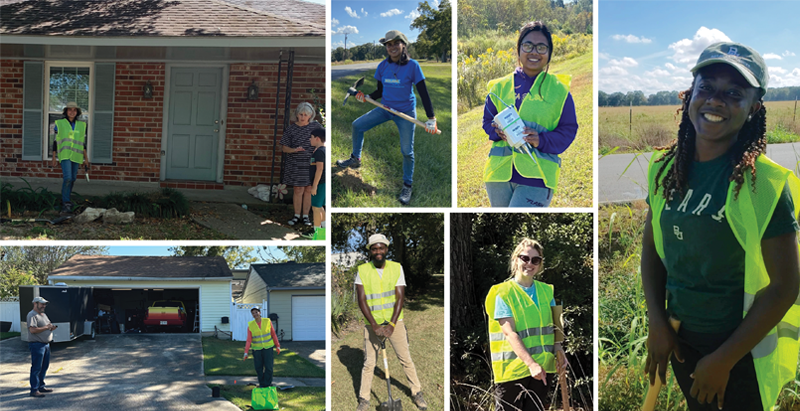
Figure 1. Photos from the Southern Louisiana Micro-Seismicity (SOLAMS) Experiment.
Geophysical Field Experiment
To underscore the ability to engage a diverse group in solving geoscience problems, a geophysical field campaign was developed in southern Louisiana specifically to address many of the long-standing inequality challenges in conjunction with imaging the subsurface (SOLAMS Experiment, 2022; Schneida et al., 2023), with the goal of investigating the relationship between faults, large-scale subsidence, and groundwater flow. To engage a diverse STEM workforce, the campaign called for volunteers from five universities in Louisiana, Texas, and Mississippi and included a Historically Black College and University, specifically noting that no prior knowledge of geophysical fieldwork was required. All individuals who could attend on the dates of the experiment were involved. The self-selected group of 26 individuals was diverse in terms of race, ethnicity, gender, background, and expertise (Fig. 1). It included 12 females and 19 undergraduate and graduate students from six STEM fields, and more than half of the group were members of historically underrepresented ethnic or racial groups. The broad demographics of this group greatly strengthened the team’s opportunities to connect meaningfully with residents.
To provide a baseline for operation, volunteers received training the day before the installation where technical and scientific aspects of the project were discussed. Each team of two was then solely responsible for interacting with the public, selecting locations where the small seismic instruments (called “nodes”) would be installed, and, in some cases, convincing residents to allow them to install the node on their property for one month. Most volunteers had no prior experience with this type of field experiment and had not worked with each other before. The benefits of involving this broad group of researchers greatly outweighed any potential decrease in efficiency associated with expanding beyond the existing research group.
A record 378 nodes were installed in one weekend, about twice the number achieved over one weekend in similar campaigns (Clayton et al., 2019; Persaud et al., 2021); the final array consisted of 432 nodes located in private and public places. The encounters between the group and local people, which included discussions of the project and its connections to the community and the environment, were both highly engaging and technically successful for the project. The university research community conducting this experiment reflected society’s diversity, and having them on residents’ doorsteps could have long-lasting positive impacts on the community and on their perceptions of science. Additionally, involving this diverse group of STEM researchers in a geoscience project with strong local relevance and impact served as an important invitation for each to consider future participation in such work. These types of communication should become everyday events if people’s images and expectations of the geosciences are to change.
Broader Impacts and Outcomes
Motivated by the societal impacts of this research, volunteers found it straightforward to be convincing about the importance of the study. One selling point used by all groups was the fact that they were from universities in the Gulf Coast region and that residents would be contributing to the science that was being done. Each group found its own way of contextualizing and delivering a convincing message, which was critical to the success of the field experiment. As a result, many homeowners wanted to see and learn more about the research the group would do. Such societal outreach promotes engagement, interest, and successful education of the broader public.
Directly involving local communities shapes not just the science we do now but also what we understand as most urgent. It educates us about what is most impactful. Scientific research that is intentionally inclusive and is supported by local knowledge builds trust in science (Sidik, 2022), and it can also foster and strengthen public participation in policymaking. Participation of underserved and underrepresented groups in prioritizing the most pressing science questions is a new frontier in the geosciences, and changing perceptions of who does geoscience could be key to redefining and expanding our future workforce.
Acknowledgments
The authors are grateful to Louisiana residents for hosting the seismic stations. The geology and geophysics department at Louisiana State University, Southern University and A&M College, and University of Louisiana at Lafayette are thanked for their support. The article has been significantly improved by comments from an anonymous reviewer and the science editor, Peter Copeland. The EarthScope Consortium provided the nodes used during the seismic experiment. Data collection under the SOLAMS project is supported by the National Science Foundation under grant 2045983.
References
- Anenberg, S., and Kalman, C., 2019, Extreme weather, chemical facilities, and vulnerable communities in the U.S. Gulf Coast: A disastrous combination: GeoHealth, v. 3, no. 5, p. 122–126, https://doi.org/10.1029/2019GH000197.
- Beane, R., Baer, E., Lockwood, R., MacDonald, H., McDaris, J., Morris, V., Villalobos, J., and White, L., 2021, Uneven increases in racial diversity of US geoscience undergraduates: Communications
Earth & Environment, v. 2, no. 126, https://doi.org/10.1038/s43247-021-00196-6. - Bernard, R., and Cooperdock, E., 2018, No progress on diversity in 40 years: Nature Geoscience, v. 11, p. 292–295, https://doi.org/10.1038/s41561-018-0116-6.
- Burke, A., Peros, M., Wren, C., Pausata, F., Riel-Salvatore, J., Moine, O., de Vernal, A., Kageyama, M., and Boisard, S., 2021, The archaeology of climate change: The case for cultural diversity: Proceedings of the National Academy of Sciences of the United States of America, v. 118, no. 30, https://doi.org/10.1073/pnas.2108537118.
- Clayton, R., Persaud, P., Denolle, M., and Polet, J., 2019, Exposing Los Angeles’s shaky geologic underbelly: Eos, v. 100, https://doi.org/10.1029/2019EO135099.
- Colten, C., 2017, Environmental management in coastal Louisiana: A historical review: Journal of Coastal Research, v. 33, no. 3, p. 699–711, https://doi.org/10.2112/JCOASTRES-D-16-00008.1.
- Guterl, F., 2014, Diversity in science: Why it is essential for excellence: Scientific American, v. 311, no. 4, p. 38–40, https://doi.org/10.1038/scientificamerican1014-38.
- Kent, J., and Dokka, R., 2013, Potential impacts of long-term subsidence on the wetlands and evacuation routes in coastal Louisiana: GeoJournal, v. 78, p. 641–655, https://doi.org/10.1007/s10708-012-9457-7.
- Luttrell, K., Schuler, N., Kgoadi, R., Pfadenhauer, J., and Wilson, C., 2023, Quantifying seasonal deformation across South Louisiana associated with Mississippi River and coastal wetland surface hydrologic loading using GNSS observations: Abstract G11C–0439 presented at 2023 Fall Meeting, AGU, San Francisco, California, 11–15 December.
- Mercer, J., Kelman, I., Taranis, L., and Suchet-Pearson, S., 2010, Framework for integrating indigenous and scientific knowledge for disaster risk reduction: Disasters, v. 34, no. 1, p. 214–239, https://doi.org/10.1111/j.1467-7717.2009.01126.x.
- Pearl-Martinez, R., and Stephens, J., 2016, Toward a gender diverse workforce in the renewable energy transition: Sustainability: Science, Practice and Policy, v. 12, no. 1, p. 8–15, https://doi.org/10.1080/15487733.2016.11908149.
- Persaud, P., et al., 2021, Earthquake hazard contributions from the Myanmar Universities Seismic Experiment (MUSE): Installing a dense seismic array in Yangon during COVID-19: First International Meeting for Applied Geoscience & Energy, Expanded Abstracts, 3081–3085, https://doi.org/10.1190/segam2021-3587129.1.
- Phillips, K., 2014, How diversity makes us smarter: Scientific American, v. 311, no. 4, p. 42–47, https://doi.org/10.1038/scientificamerican1014-42.
- Schneida, A., Persaud, P., Juarez-Zuñiga, A., and the SOLAMS Team, 2023, Evaluating site resonance frequency with horizontal-to-vertical spectral ratios from dense arrays across the Tepetate-Baton Rouge Fault System, US Gulf Coast: Poster S43H–0430 presented at 2023 Fall Meeting, AGU, San Francisco, California, 11–15 December.
- Sidik, S., 2022, Weaving Indigenous knowledge into the scientific method: Nature, v. 601, p. 285–287, https://doi.org/10.1038/d41586-022-00029-2.
- Southern Louisiana Micro-Seismicity (SOLAMS) Experiment, 2022, Louisiana Micro-Seismicity (SOLAMS): https://www.geo.arizona.edu/~ppersaud/SOLAMS.html (accessed November 2023).
- Tilghman, S., Alberts, B., Colon-Ramos, D., Dzirasa, K., Kimble, J., and Varmus, H., 2021, Concrete steps to diversify the scientific workforce: Science, v. 372, p. 133–135, https://doi.org/10.1126/science.abf9679.
- Todd, W., Atchison, C., and White, L., 2023, Amplifying the voices of diverse scholars to integrate culture in the earth sciences: Journal of Geoscience Education, v. 71, no. 3, p. 281–287, https://doi.org/10.1080/10899995.2022.2140276.