
Celebrating Where Deep Time Began: James Hutton, Siccar Point, and Scotland’s Geological Heritage
Rebecca Taormina
In this article
In 2026, GSA launched a new initiative focused on non-meeting field trips—immersive travel experiences designed to connect members with some of the world’s most significant geological sites alongside leading experts, all at member-friendly prices.
There could be no better place to begin than Scotland.
To celebrate the 300th anniversary of James Hutton’s birth on 3 June 2026, GSA organized its inaugural international geoheritage excursion to Edinburgh and Siccar Point, widely regarded as one of the most important geological sites in the world. Twenty-seven geoscience enthusiasts traveled to Scotland for an unforgettable week of exploration, learning, and celebration that coincided with the opening of the Deep Time Trail and the international festivities honoring Hutton’s legacy.
Figure 1
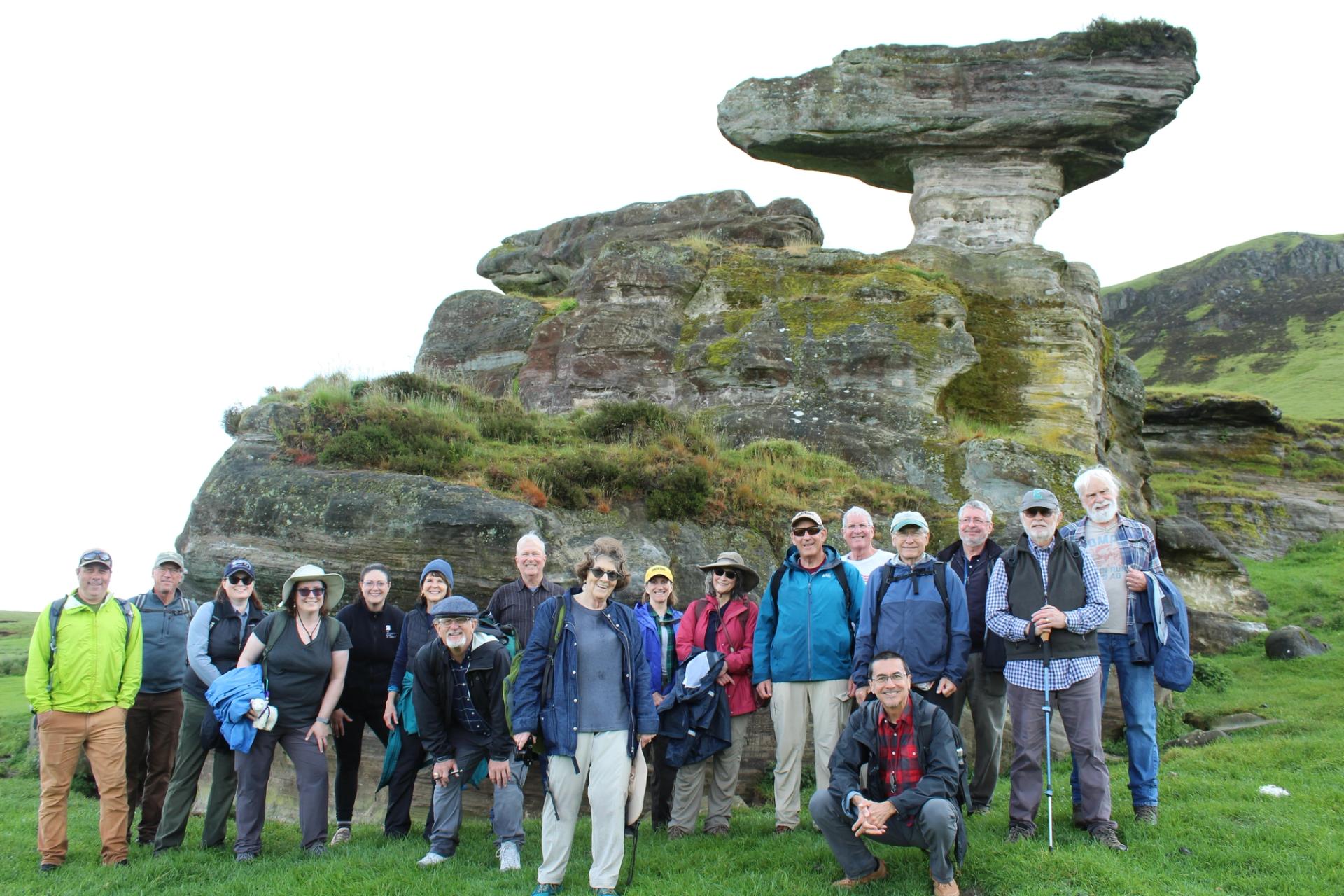
Participants in GSA’s inaugural geoheritage excursion at Siccar Point, Scotland.
The journey began more than a year earlier when representatives associated with the James Hutton Institute approached GSA about supporting efforts to improve public access to Siccar Point through the creation of a well-marked trail. Working closely with Angus Miller and colleagues from the Edinburgh Geological Society, we saw an opportunity not only to support an important geoheritage initiative, but also to create a truly unique experience for our members.
What followed exceeded every expectation.
Despite being announced on relatively short notice, the trip sold out within two weeks of opening registration. Demand was so strong that additional spaces were added to accommodate interested participants. The enthusiasm demonstrated a clear desire within the geoscience community for thoughtfully curated travel experiences that bring members face-to-face with the places that shaped our science.
For many participants, this was far more than a field trip—it was a pilgrimage.
The group ranged in age from 29 to 87 years old, yet remarkably, none had previously visited Siccar Point or many of the sites associated with James Hutton’s work. Throughout the week, participants immersed themselves in Scotland’s rich geological and intellectual history through seminars, guided city tours, coastal hikes, boat excursions, museum visits, and field experiences led by local experts. The itinerary also included programming at Dynamic Earth, participation in events hosted by the Royal Society of Edinburgh, Scottish Geology Trust and the James Hutton Institute, and opportunities to engage with members of the Edinburgh Geological Society and Scotland’s broader geoscience community.
The highlight, of course, was standing at Siccar Point itself.
There, participants witnessed firsthand the famous angular unconformity that inspired Hutton’s revolutionary understanding of deep time and Earth's dynamic processes. Walking the same landscape that helped transform humanity’s understanding of our planet created a connection to geological history that simply cannot be replicated in a classroom, textbook, or lecture hall.
Figure 2
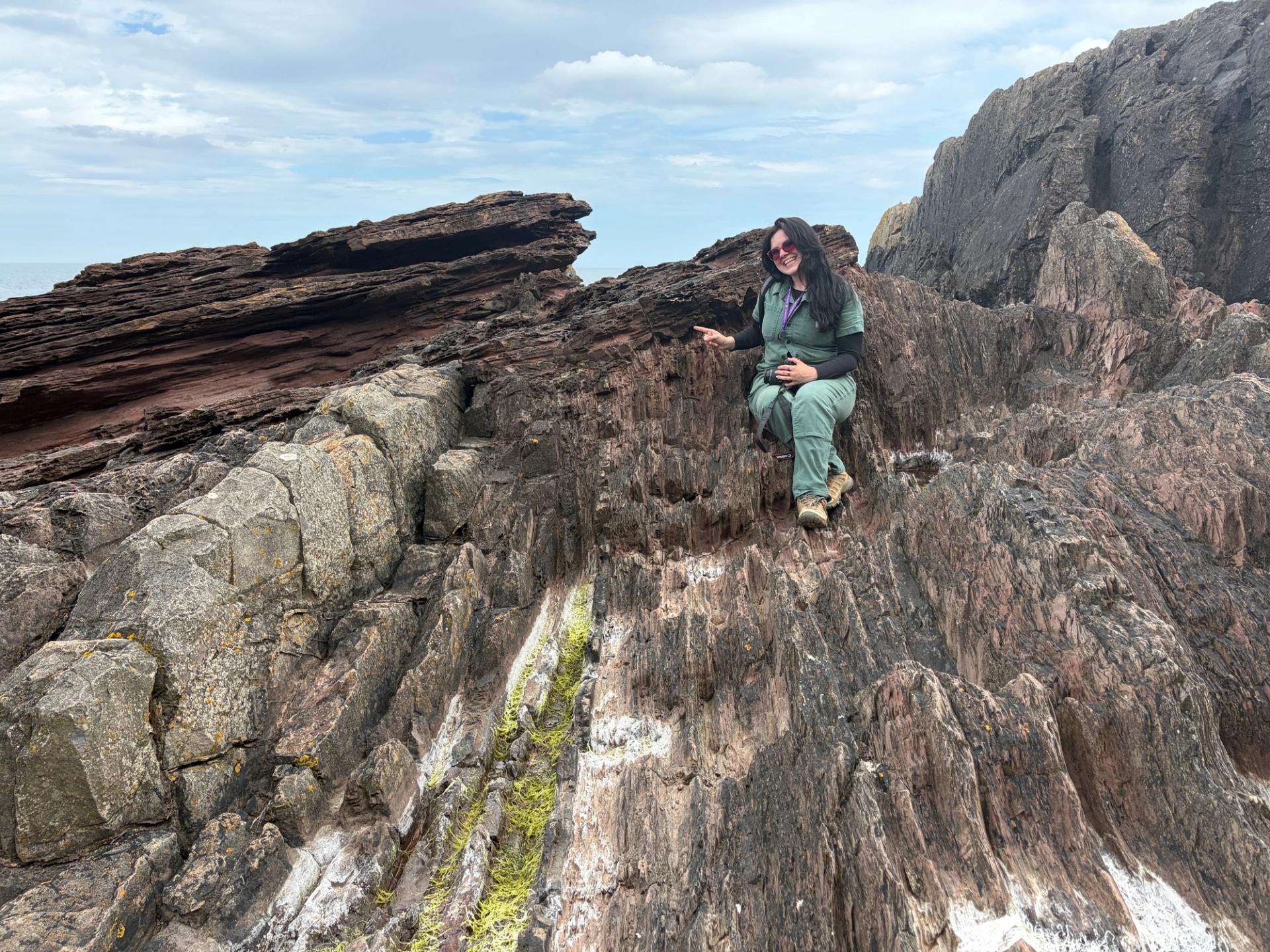
Ashley Lynn.
The significance of the occasion attracted attention beyond the geoscience community. A documentary film crew accompanied the group during its visit to Siccar Point, capturing both the celebration of Hutton’s tricentennial and the personal experiences of participants making their own journey to the birthplace of modern geology.
For many participants, visiting Siccar Point fulfilled a lifelong dream.
"Before this trip, Siccar Point had been nothing more than a picture in my Historical Geology textbook," reflected Paula Leier-Engelhardt. "I left Siccar Point knowing I stand on the shoulders of giants. I did not expect to be as emotional as I was that day."
That emotional connection was shared throughout the group. Jim Heller, who had seen images of the famous unconformity throughout his career, described experiencing the outcrop in person as transformative.
Figure 3
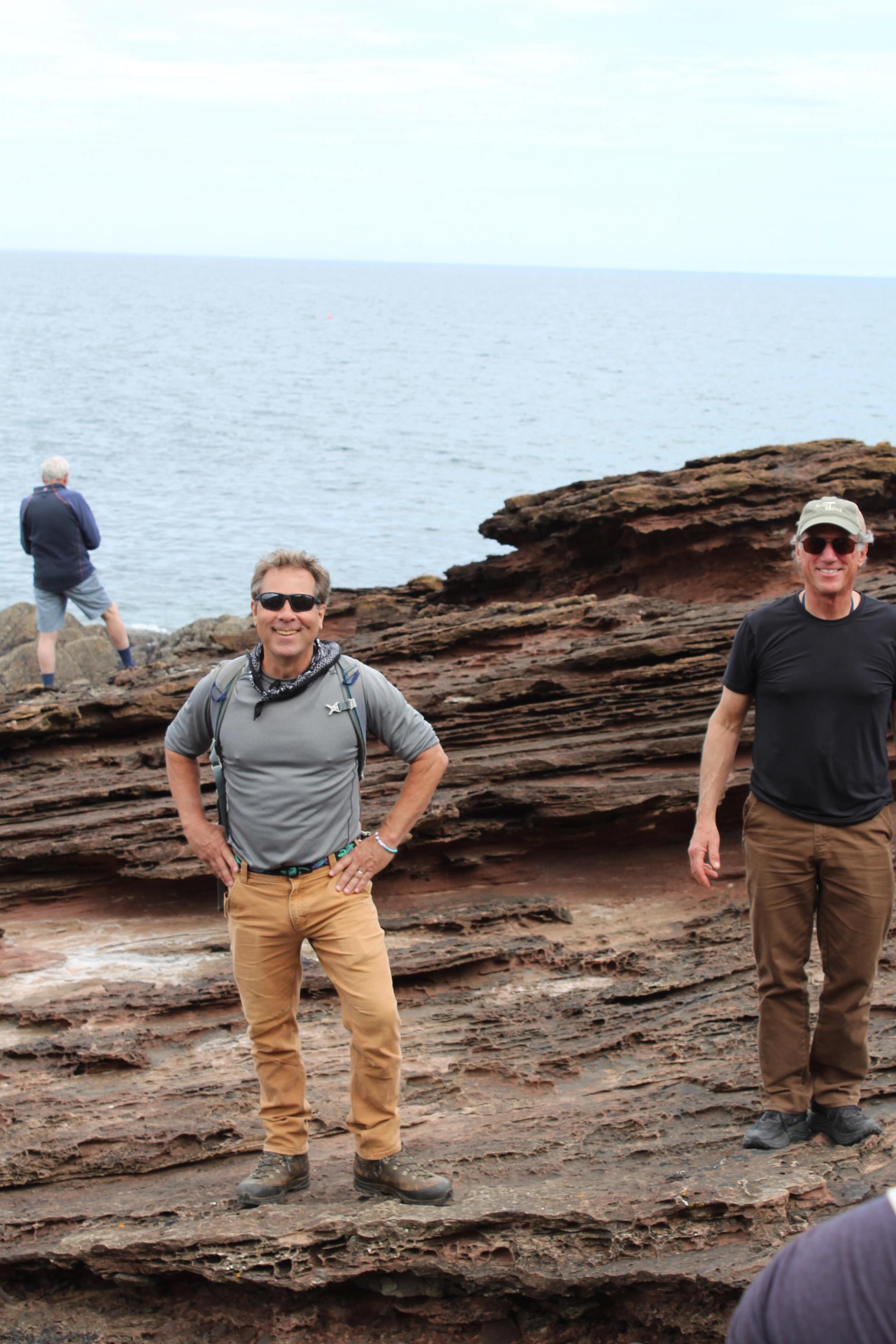
Chuck Bailey and John Mills.
"I couldn't appreciate the enormity of Hutton's insights until I visited the outcrop," he said. "During our RIB excursion, our Deep Time group was quiet, perhaps reverent, as the vessel meandered around Siccar Point. We were seeing what Hutton saw back in 1788. What an amazing experience!"
For others, the journey represented the fulfillment of a decades-long goal. "Siccar Point had always been on my geological bucket list," said Douglas S. Jones. "After visiting the site and learning more about James Hutton, I could appreciate firsthand the dramatic field evidence he used to argue for the vastness of geologic time. This trip made it all come alive for me."
That sentiment resonated with Jon Blickwede, who first learned about Hutton and Siccar Point in an introductory geology course nearly 50 years ago.
"After having visited Siccar Point by land and by sea, I realized how important Hutton's original concept of deep time was to my own journey into geology," he reflected. "It was especially moving to see the Great Unconformity by boat, just as Hutton first observed it in 1788."
Figure 4
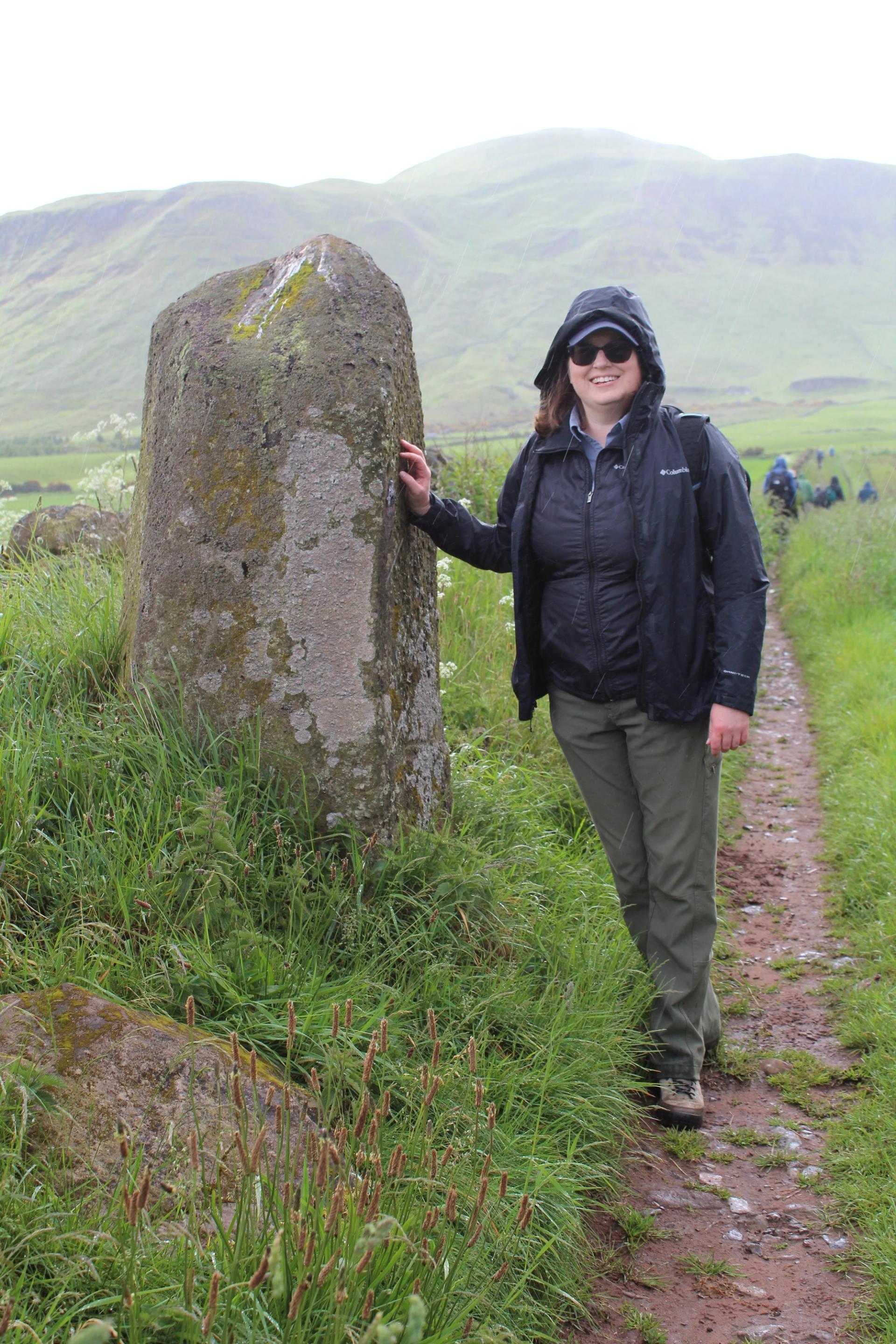
Laura Murphy.
As GSA continues to expand its non-meeting field trip program, Scotland serves as a powerful example of what these experiences can achieve: meaningful scientific engagement, lifelong learning, professional connections, and unforgettable moments at the places that define our discipline.
The future is already taking shape. GSA's next international geoheritage adventure is planned for Iceland, where participants will explore the dynamic landscape of fire and ice, witness active geological processes, and stand where continents continue to pull apart in real time.