
Penrose Conferences
Revitalize your geology at GSA’s Penrose Conference, the premier small meeting for collaborative research around the world. Introducing a brand new format and criteria for submission.

Current Conferences
Defining the Future of Timescale Calibration
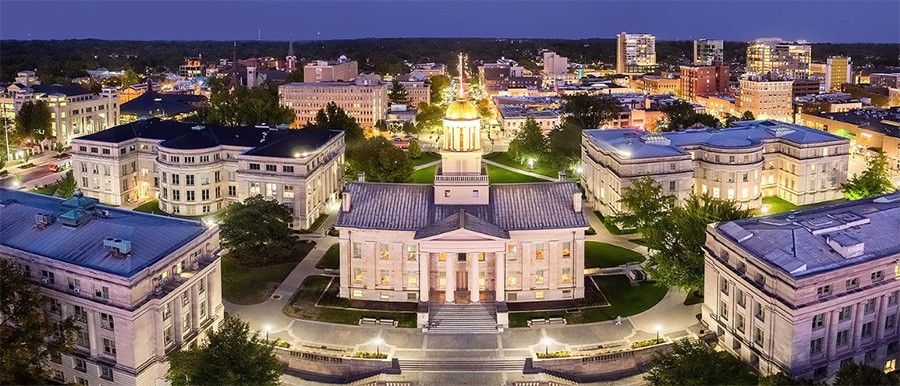
Iowa, USA | 30 May–5 June 2026
Registration is closed.
Conveners
Brad Cramer,
University of Iowa
Mark Schmitz,
Boise State University
Anne-Christine Da Silva,
University of Liège
Overview and Objectives
We are pleased to announce the 2026 GSA Penrose Conference will be held in Iowa City, Iowa, hosted by the International Subcommission on Timescale Calibration (ISTC). Please join us for a week of posters, presentations, and panel discussions on the future of timescale calibration as we officially kick off activities for the creation of the Geologic Time Scale 2030 (GTS2030). The meeting is limited to 90 participants and financial assistance to attend is widely available.
Meeting includes an icebreaker event the evening of the 30th, five days of meetings and panels to discuss the present and future of the GTS, and an additional field trip day included to view the spectacular Devonian-Carboniferous boundary sections in southeastern Iowa. Full meeting registration costs include icebreaker, conference banquet, field trip, and meeting registration.
Registration costs (not including housing, meals, or travel) are currently estimated at $350 per person for the week-long event.
Application and Registration
GSA and the conveners are committed to fostering an inclusive and diverse community of researchers engaged in geologic timescale development. We welcome interest from individuals of all backgrounds, and we particularly encourage participation from students, postdoctoral scholars, and early career faculty.
A total of 90 participants will attend this meeting including keynote addresses and invited lectures from members of many subcommissions of the International Commission on Stratigraphy. The meeting is formally hosted by the International Subcommission on Timescale Calibration, and students and early-career scientists are strongly encouraged to apply to attend. Priority for attendance and financial support will be given to rising early-career scholars. We welcome applications from practitioners of any discipline or sub-discipline within geoscience for whom the GTS is a critical component. Accepted participants will be notified following review by the conveners.
Application
Penrose Conferences require an application to attend due to the limited space for participation (90 total participants). If you are interested in attending, please complete the application form at the GSA website below by January 30th.
Participation in Penrose Conferences is intentionally limited to foster deep scientific discussion and collaboration. Applications to attend the meeting and for financial support will be followed by the abstract and registration deadline.
Total conference attendance will be limited to 90 participants. Each participant will be expected to present at the conference (either oral or poster presentation), and to attend the full duration of the conference. Submission of an application does not guarantee acceptance, nor does it commit you to attendance.
Applicants will be notified of their attendance by or before 21 February. Registration will open 21 February. Conference participants will be asked to register and submit a full abstract at that time.
International Attendees
Complete and print out your Letter of Invitation
Session Formats and Themes
Formats
The conference will include a mix of oral, poster, and discussion session formats.
Oral sessions will feature keynote and invited speakers, as well as presentations drawn from at-large applicants to the conference.
Preliminary keynote speakers: TBD
Field Trip
The one-day field trip will take attendees to Devonian-Carboniferous Boundary Strata in Iowa. Transportation and lunch are included with the conference registration.
Cost
Thanks to the generous support of our sponsors, portions of the meeting costs will be covered. The registration is $350, plus rooming costs, totaling $770 for double occupancy or $1190 for single occupancy. This fee covers conference venue facility use, transportation for the field trip, snacks and coffee breaks during the conference, field trip lunch, icebreaker dinner and banquet dinner.
Financial support for attendance will be available. This will be distributed on a needs basis.
Conference Venue: Iowa Memorial Union
Located on the University of Iowa campus, the Iowa Memorial Union, or IMU, has been at the center of campus life since 1923. It houses numerous offices, meeting rooms, dining and entertainment areas as well lounges and other services.
Conference activities and lodging will be hosted in Iowa City, Iowa.
Travel and Transportation
Attendees will be responsible for arranging travel to Iowa City, Iowa, arriving no later than mid-day 30 May 2026.
Arrival airport: Flights arrive at Eastern Iowa Airport (CID) Cedar Rapids, IA.
Transit Information: Airport (CID) – The Graduate by Hilton, Iowa City
Distance and travel time: Iowa City is approximately 23 miles from the airport. Travel time typically ranges from 25-30 minutes, depending on traffic and time of day.
Transportation options:
- Shuttle: Anaman Concierge Services offers an airport shuttle between CID and the Iowa City area, including round trips to and from local hotels.
- Ride services/taxis: Readily available at the airport
Transportation to/from Conference Venue: the hotel is walking distance from the IMU.
Preliminary Schedule
The following is an example conference schedule and is subject to change.
- Day 0 – 30 May: All attendees arrive in Iowa City no later than this day. Evening welcome reception and icebreaker.
- Day 1 – 31 May: Stratigraphy and GSSPs. Conference Banquet in evening.
- Day 2 – 1 June: Geochronology and Numerical Time.
- Day 3 – 2 June: One Day Field Trip to Devonian-Carboniferous Boundary Strata in Iowa.
- Day 4 – 3 June: Computational Stratigraphy and Big Data.
- Day 5 – 4 June: Current Challenges of the Subcommissions.
- Day 6 – 5 June: Numerical Calibration of the Timescale & GTS2030 – Close of meeting in evening.
- Day 7 – 6 June: Participants depart.
Hydrogeology of High Mountains: An Emerging Frontier for Water Resources, Landslide Hazard, and Carbon Fluxes
Dhulikhel, Nepal | 17–22 May 2026
International Attendees
Complete and print out your Letter of Invitation
Nepal issues entry visas on arrival at Kathmandu's Tribhuvan International Airport. To support this process, attendees can download an official letter of invitation to attend the conference. Attendees are advised to carry a hard copy of the letter. Further information about the visa on arrival can be found here.
Overview and Objectives
Long overlooked, the hydrogeology of mountainous regions has recently burst on the scene as a topic of interest for researchers in multiple areas of geoscience and from diverse parts of the world. Concepts such as “Mountain Block Recharge” extend back at least to the mid-20th Century in the western US, but these phenomena saw modest interest and limited progress in scientific understanding until the past two decades or so.
In recent years, work on the extent and dynamics of mountainous bedrock groundwater has emerged as a key frontier for assessing future scenarios for water resources in a changing climate, for better predicting landslide hazards, and for quantifying weathering reactions that control water quality and global climate over geologic time. It is now clear that high mountains often host important bedrock aquifer systems, with substantial flow that can provide local water resources, sustain river flows downstream, and even provide vital recharge for lowland aquifers. Yet major questions are still to be answered, such as (1) how long and to what extent groundwater can be expected to substitute for declining flows from snow and ice in a warming climate, (2) when and where high mountain ecosystems depend on groundwater, and (3) how groundwater flow controls subsurface water-rock interactions that determine water quality as well as the CO2 consumption via chemical weathering. These questions—and others like them—cut across major problems in the geosciences, from groundwater management to understanding the operation of global climate-carbon cycle feedbacks over geologic time.
Perhaps because of such wide range in relevance, the recent flurry of progress in high mountain hydrogeology has taken place across disparate sub-disciplines and across a wide geographic scope. To date, much of this work has remained disconnected.
This goal of this Penrose Conference is to bring together those working on high mountain hydrogeology to cross-pollinate, providing a much-needed intellectual space for sharing lessons learned, challenges faced, and future priority directions. The objective will be to set an agenda for coordinated work in this field for the coming decade, in ways that can leverage the combined expertise and diverse perspectives in ways not currently embedded in active research on this topic.
Conference dates: 17-22 May 2026
Field trip (optional): 22-23 May 2026
The application period has ended.
Organizers
Marin Clark (University of Michigan), A. Joshua West (University of Southern California), Niels Hovius (GFZ German Research Centre for Geosciences), Deepak Chamlagain (Tribhuvan University, Tri-Chandra Campus)
Sponsors
The Geological Society of America
US National Science Foundation Frontier Research in Earth Sciences (FRES) Program
Session Formats and Themes
Formats
The conference will include a mix of oral, poster, and discussion session formats.
Oral sessions will feature keynote and invited speakers, as well as presentations drawn from at-large applicants to the conference.
Preliminary keynote speakers: TBD
Poster Sessions will include “lightening presentations” that provide brief (2-3 minute) previews of the poster content. Discussion Sessions provide time for substantive group discussion that include time for smaller group interaction in break-out groups.
Themes
Theme 1: Advances in observational and measurement techniques to characterize high mountain hydrogeology in a changing climate
Theme 2: Modeling mountain water resources in a changing climate: a future for mountain water towers beyond snow and ice?
Theme 3: Ecohydrological dynamics in high mountains
Theme 4: Landslides, debris flows, and outburst floods: the role of hydrological pre- conditioning and triggering
Theme 5: The hydrogeological reactor: Chemical weathering and C fluxes from high mountains
Theme 6: Social vulnerability to changing mountain hydrogeology
Field Trip
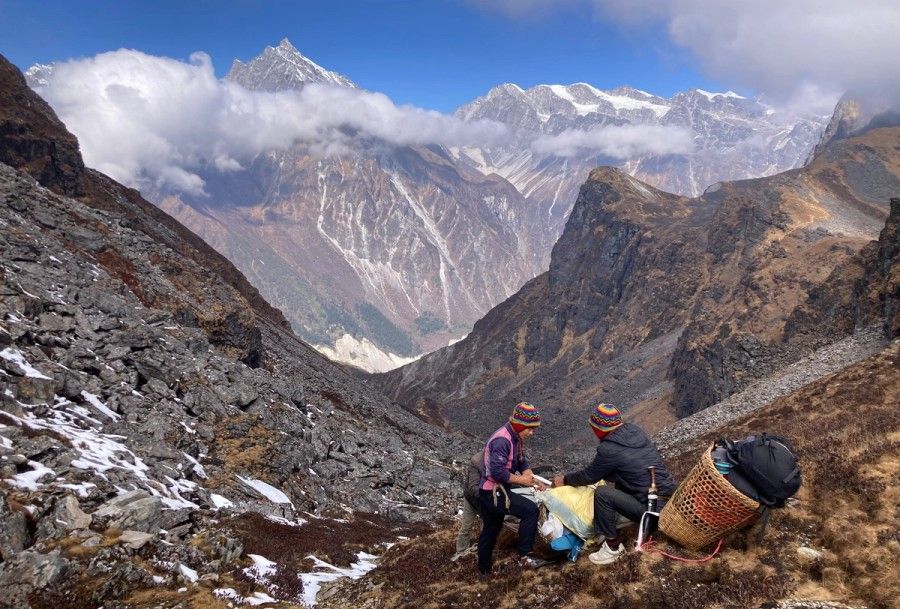
The optional field trip will take attendees to the Melamchi River valley, a poster child for the challenges and opportunities in mountain hydrogeology in three key respects: (1) it is the site of the Melamchi Water Supply Project (MWSP), an ambitious inter-basin water transfer project designed to deliver water to the Nepali capital, Kathmandu; (2) it suffers from extensive annual landslide activity and the effects of a devastating, sediment-laden flooding in 2021, sourced from the High Himalaya with devastating consequences for communities downstream and for the MWSP; and (3) it is the location of intensive active scientific research including in mountain hydrology and hydrogeology.
Conference participants will be given the option to participate in a 1-day field trip, a 2-day field trip, or to return to Kathmandu on the morning of Day 5 of the conference (if they do not want to participate in the field portion). To maintain cohesion, the two participant groups taking part in the field trip will be together during Day 1, with those opting for the 1-day field trip returning to Kathmandu in the evening, and those opting for the 2-day field trip continuing to Tarke Ghyang (overnight stay) and returning to Kathmandu the next day.
The field trip will take participants across the transition from the relatively subdued topography of the Himalayan Middle Hills, where hillslopes are soil mantled, population density is high, and terraced agriculture is widespread, to the High Himalaya where topography is steep, relief is dramatic (>km), and landslides are prevalent—presenting a stark contrast in hydrogeological boundary conditions. The climb to Ama Yangri Peak will provide those who take part with a stunning view of the High Himalaya and the terrain dominated by glacial activity and seasonal snow.
Attendance, Applications, and Registration
Total conference attendance will be limited to 60-80 participants. Each participant will be expected to present at the conference (either oral or poster presentation), and to attend the full duration of the conference. Submission of an application does not guarantee acceptance, nor does it commit you to attendance.
Applicants will be notified of their attendance by or before 20 February. Conference participants will be asked to register and submit a full abstract at that time.
Cost
Thanks to the generous support of our sponsors (including GSA and NSF), portions of the meeting costs will be covered. We are still working on finalizing the registration costs, but we expect it to be about $500 (double occupancy) to $700 (single occupancy) for the main conference. This fee will cover meals, lodging in Dhulikhel, Nepal, and facility use for the main 4-day/5-night duration of the conference. It will not cover airfare, lodging in Kathmandu (which is optional and will depend on your choice of travel timing), or participation in the optional post-conference field trip. We will provide estimates of field trip costs soon.
Financial support for attendance will be available. This will be distributed on a needs basis, and might benefit early career researchers, emeriti/late career people, and attendees from low- to mid-income nations. A number of places have also been reserved for Nepali participants at reduced cost.
Conference Venue: Dhulikhel Nepal
Located in the mountains approximately 30 kilometers from Kathmandu, Dhulikhel, features stunning views of some of the world’s highest mountain peaks.
Conference activities and lodging will be hosted in Dhullikel, Nepal.
Travel and Transportation
Attendees will be responsible for arranging travel to Kathmandu, Nepal, arriving no later than mid-day 17 May 2026.
The date and time of participants returning to Kathmandu will depend upon field trip participation:
- No field trip – Depart Dhulikhel at 9 am on 22 May, return to Kathmandu ~11 am
- 1-day field trip – Return to Kathmandu the evening of 22 May after full-day field trip
- 2-day field trip – Return to Kathmandu the evening of 23 May after field trip
For field trip participants, we recommend booking flights departing Kathmandu no earlier than midnight on the day you return from the field trip to allow sufficient travel time.
Arrival airport: All international and domestic flights arrive at Tribhuvan International Airport (TIA), Kathmandu.
Transit Information: Airport (TIA) – Dhulikhel Lodge Resort (Conference Venue)
Distance and travel time: Dhulikhel is approximately 30 km (19 miles) from the airport. Travel time typically ranges from 1–2 hours, depending on traffic and time of day.
Transportation options:
- Hotel transfers: Dhulikhel Lodge Resort offer airport pickup upon request. Participants are encouraged to contact hotel directly in advance to arrange this.
- Private taxi: Taxis are readily available outside the airport. Prepaid taxi counters are inside TIA. It is recommended to use prepaid taxi service for convenience and fixed pricing.
- Ride services: Nepal does not have Uber or other international ride-hailing platforms. The most commonly used app-based ride services in Kathmandu are Pathao and InDrive. Participants are encouraged to download these apps for transportation between the airport and their hotel, as well as for travel within Kathmandu. A local mobile network connection is required to use app-based ride services. Local SIM cards (including eSIM options) are available for purchase at Tribhuvan International Airport.
Recommended Hotels in Kathmandu
Attendees will be responsible for arranging accommodations in Kathmandu if arriving before and/or departing after the conference dates.
Budget Range (Approx. USD 60–80 per night)
- The Maya Manor Boutique by KGH Group – 3.8 miles (approx. 30–45 min drive)
- Holiday Inn Express Kathmandu Naxal by IHG – 2.6 miles (approx. 20–30 min drive)
- Hotel Shambala, Kathmandu – 3.9 miles (approx. 30–45 min drive)
Mid-Range (Approx. USD 80–110 per night)
- Ramada by Wyndham Kathmandu Dhumbarahi – 3.3 miles (approx. 35–40 min drive)
- Fairfield by Marriott Kathmandu – 3.5 miles (approx. 35–40 min drive)
- Hotel Tibet International – 2.9 miles (approx. 20–35 min drive)
- Mercure Kathmandu Sukedhara Heights – 2.7 miles (approx. 20–35 min drive)
- The Everest Hotel Kathmandu – 3.1 miles (approx. 25–40 min drive)
Premium Range (Approx. USD 110+ per night)
- Aloft Kathmandu – 3.8 miles (approx. 30–45 min drive)
- Hotel Yak & Yeti – 3.5 miles (approx. 25–45 min drive)
Note: Distances shown are approximate miles from the airport. Prices are approximate nightly rates (USD) and exclude taxes and fees. Travel times in Kathmandu may vary due to traffic conditions. As a general guideline, travel typically takes about 8–12 minutes per mile from the airport area.
Accommodation and Meals
Lodging and meals will be provided over the duration of the conference at the conference venue. Registration fee includes meals and lodging arranged by the conference organizers.
Preliminary Schedule
The following is an example conference schedule and is subject to change.
Day 0 - 17 May
All attendees arrive in Kathmandu no later than this day
Afternoon transfer to Dhulikhel
Evening welcome reception and icebreaker
Day 1 - 18 May
8-9 am: Welcome, introductions, objectives
9 am-12 pm: Morning oral session and discussion
Theme 1: Advances in observational and measurement techniques, Part 1
Hydro-meteorological monitoring
Remote sensing
12-1 pm: Lunch
1-2 pm: Lightning poster presentations related to Theme 1 posters
2-4 pm: Afternoon oral session and discussion
Theme 1, cont: Advances in observational and measurement techniques, Part 2
Shallow geophysics and subsurface imaging
Transit times of water
4-5:30 pm: Tea break and posters (focus on Theme 1 posters)
5:30-7 pm: Discussion
Day 2 - 19 May
8 am-12 pm: Morning oral session and discussion (with tea/coffee break 9:45-10:15 am)
Theme 2: Modeling mountain water resources
12-1 pm: Lunch
1-2 pm: Lightning poster presentations related to Theme 2 and Theme 3 posters
2-4 pm: Afternoon oral session and discussion
Theme 3: Ecohydrological dynamics in high mountains
4-5:30 pm: Tea break and posters (focus on Theme 2 and Theme 3 posters)
5:30-7 pm: Discussion
Day 3 - 20 May
8 am-12 pm: Morning oral session and discussion (with tea/coffee break 9:45-10:15 am)
Theme 4: Landslides, debris flows, and outburst floods
12-1 pm: Lunch
1-2 pm: Lightning poster presentations related to Theme 4 and Theme 5 posters
2-4 pm: Afternoon oral session and discussion
Theme 5: The hydrogeological reactor: Hydrochemistry, chemical weathering and C fluxes
4-5:30 pm: Tea break and posters (focus on Theme 4 and Theme 5 posters)
5:30-7 pm: Discussion
Day 4 - 21 May
8 am-12 pm: Morning oral session and discussion (with tea/coffee break 9:45-10:15 am)
Theme 6: Social vulnerability to changing mountain hydrogeology
11 am-12 pm: Discussion and planning for afternoon synthesis
12-1 pm: Lunch
1-7 pm: Structured discussion and breakout sessions aimed at synthesis
Days 5-6 - 22-23 May: Optional Field Trip*
9 am: optional return transport to Kathmandu for those not participating in the field trip
*See Field Trip section for field trip information and logistics. See section below for intinerary.
Field Trip Itinerary
Schedule and locations are subject to change.
Conference Day 5 / Field Trip Day 1
8 am: Departure from Dhulikhel
9-10 am: Drive to Melamchi Bazaar
10-11 am: Stop 1 - Melamchi Bazaar (survey of damage from 2021 floods)
11 am-12 pm: Drive to Tallathok
12-1 pm: Stop 2 - Tallathok (hydrology of highly weathered Himalayan Middle Hills)
1-2 pm: Lunch at Tallathok
2-3 pm: Drive to Sermanthang
2-3 pm: Stop 3 - Sermanthang (hydrology of High Himalaya)
3 pm: 1-day group begins drive back to Kathmandu, 2-day group continues to Tarke Ghyang
Conference Day 6 / Field Trip Day 2
4 am: Optional sunrise climb of Ama Yangri Peak
8-9 am: Breakfast at Tarke Ghyang
9-10 am: Drive to Nakote Gorge
10-11:30 am: Stop 4 - Nakote Gorge (dramatic gorge carved during 2021 flood)
11:30 am-12:30 pm: Lunch at Nakote
12:30-2 pm: Drive to Melamchi Water Supply Project
2-3 pm: Stop 5 - Melamchi Water Supply Project
3 pm: 2-day group begins drive back to Kathmandu
For questions, contact deepakchamlagain73@gmail.com or hovius@gfz.de.