
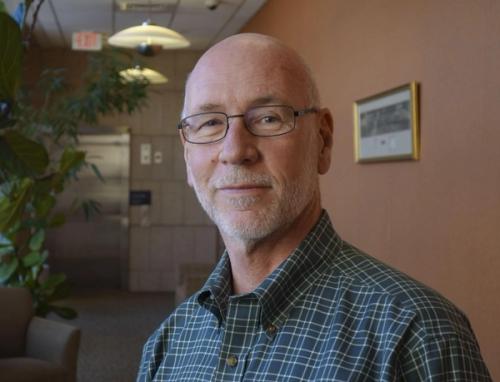
Craig S. Feibel
Rutgers University
In this article
2026 Rip Rapp Archaeological Geology Award
Presented to Craig S. Feibel
Citation by Chris Campisano
On behalf of numerous supportive colleagues, it is my pleasure to present the 2026 GSA Rip Rapp Archaeological Geology Award citation for Dr. Craig Feibel in recognition of his seminal contributions to geoarchaeology, his exceptional leadership in collaborative science, and his lasting influence on our understanding of the geological foundations of the human story.
For more than four decades, Craig’s research in the Afro-Arabian Rift System, particularly in the Turkana Basin of Kenya, has transformed the role of geology in paleoanthropology and archaeology. Through meticulous field and lab investigations, from isolated localities to basin-scale geological syntheses, he has established the chronologic and environmental framework that underpins interpretations of many of the most iconic hominoid/hominin fossils and archaeological sites in the Turkana Basin and elsewhere (e.g., Israel, Ethiopia, Tanzania, Java). His work has illuminated how tectonics, volcanism, depositional environments, and climate have interacted to shape the landscapes inhabited by our ancestors.
Craig's scientific achievements are typically embedded within collaborative projects, where he has earned a reputation as a reliable and unpretentious colleague and leader — a trusted geologist to whom generations of archaeologists and paleoanthropologists have turned for geological insight and scientific judgment. His quiet leadership has advanced major international scientific initiatives that have redefined the field’s ability to integrate the Turkana record across millions of years and tens of thousands of square kilometers, while enabling the work of countless colleagues and students.
Equally laudable is Craig’s commitment to education and the scientific community. Beyond his teaching at Rutgers University and Turkana University College, Craig has mentored generations of students in field geology through decades of hands-on, boots-on-the-ground training at the Koobi Fora Field School and the Turkana Basin Institute, inspiring many who have gone on to become leaders in the discipline while also championing the development of emerging African scientists.
As someone who consistently places advancing the science above promoting himself, Craig is not one for the limelight, but his accomplishments and contributions are certainly deserving of it. His generosity, intellectual rigor, and commitment to collaborative science have inspired colleagues and students alike and serve as an example to us all. Congratulations, Craig!
Response by Craig S. Feibel
Thank you to the colleagues who nominated me for this award, to the Archaeological Geology Division, and to the Geological Society of America for sponsoring it. The George “Rip” Rapp Award recognizes interdisciplinary research, and the list of previous recipients highlights the wonderful diversity of approaches to archaeological geology. I am tremendously honored to accept this award.
I have been very fortunate in my career. I have been able to follow the paths that held my interest, even though they were perhaps those less trodden. I’ve had support of family, friends, colleagues and of course funding agencies along the way. They all allowed me to play the long game, to dig into corners that seemed a little obscure at first, and to take the time to sort things out. Much of my success has come from a willingness to go to uncomfortable places, at difficult times, and to take advantage of the amazing opportunities that my colleagues have opened to me. I’m especially grateful to Hélène Roche, Naama Goren-Inbar, Sonia Harmand, Richard, Meave and Louise Leakey, Harry Merrick and Frank Brown, all of whom supported my curiosity and allowed me to explore the landscapes of archaeological geology.
I have also been extremely fortunate to have wonderful students to work with. Watching them struggle, overcome obstacles, and ultimately succeed is a very fulfilling experience. It is especially rewarding to have them continue as valued colleagues and collaborators, and I will call out Chris Campisano and Cat Beck in this regard. When I was still a graduate student, I was invited to teach geology for a field school at Koobi Fora in Kenya. I quickly realized that being able to teach in an ideal natural laboratory was the perfect combination, and I leaned as much from the experience as I taught. Combining fieldwork and teaching has always been particularly rewarding.
Archaeological Geology is a discipline that allows us to apply a broad range of geological tools in pursuit of problems that are of fundamental interest. I’ve always been a collector of tools, and enjoy tinkering with them to find new uses, and make modifications to meet new needs. Respecting the tools of the trade is a key to success. Our work is fundamentally linked to field geology, which drew so many of us to this science in the first place. Being invited to see and work at a wide range of sites all over the world has been a highlight of my career, and the experience has brought insights and connections critical to understanding the problems at hand.
While archaeologists and paleontologists tend to focus on the finds from a site, I was always free to consider all that “other” stuff, the context, the associated stratigraphy, the regional setting, the neglected rocks and fossils. Being able to integrate these sources of insight through a variety of scales has made the puzzles so much more interesting, and that much more challenging. The interdisciplinary nature of archaeological geology is one of its greatest strengths.
Thank you all for this recognition. It has been a lot of fun.