
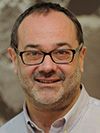
Christian Koeberl
University of Vienna
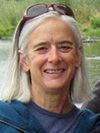
Nancy Riggs
Northern Arizona University
2019 GSA Distinguished Service Award
Presented to Christian Koeberl & Nancy Riggs
Citation by Janice Bishop
Dr. Christian Koeberl is awarded the GSA Distinguished Service Award for his highly effective contributions as science editor of GSA publications, long-term support of GSA meetings and special sessions, and for his generous promotion, service, and time volunteering for the geoscience community through journal editing, scientific reviews, publications, public talks, and museum exhibits. Christian has been at the University of Vienna since 1985, first as assistant, then associate, and finally full professor of “Impact Research and Planetary Geology”. He is also a full member of the Austrian Academy of Sciences (where he chairs several committees), and asteroid 15963 is named “Koeberl” in his honor. He has mentored countless graduate students and postdocs from many countries around the world. Thus, he has launched numerous young scientists on geochemistry careers and spread knowledge on Neutron Activation Analysis and other geochemistry techniques to many in our society.
He became an Associate Editor of the GSA Bulletin in 2006, then stepped up to serve as Editor in Chief from 2009-2015, and has continued as Associate Editor since 2016. Also in 2016 he became the GSA Books Editor, a role he still holds today; he has recently been confirmed for a second term until 2023. Further, as associate editor of the journals “Geochimica et Cosmochimica Acta” and “Meteoritics and Planetary Science” for decades he has ensured the highest standards in publication of our community’s geochemistry papers. He also served on the GSA Committee on Penrose Conferences and Field Forums from 2009 to 2013 and took on the role of Chair from 2011 to 2013. His own research spans over 460 peer-reviewed papers (as of 2019) on all aspects of impacts and geochemistry, covers many types of geologic environments, and explores multiple field sites around the Earth and on planetary bodies.
Christian became Director General of the Natural History Museum in Vienna in 2010, taking on a top to bottom revision of this important, historic collection of rocks, minerals, meteorites, and gems. He has transformed this institution into a modern and engaging museum that has become a popular outing for families, tourists, and schools, as well as a state-of-the-art research facility. Vienna’s Natural History Museum has a 270-year-history and is one of the largest and most important of its kind in the world. It houses the world’s oldest meteorite collection, and also presents the world’s largest meteorite display. Under Christian’s tenure, the famous meteorite hall was completely updated and modernized, as were the dinosaur hall, the anthropology and prehistory displays, and facilities like the shop, coffee/restaurant, wardrobes, and parts of the mineral and geology displays. In addition, modern research laboratories were installed. The museum has about 350 employees, including 70 scientists, and during Christian’s tenure as director the number of visitors has almost doubled, to close to 800,000 per year, and the number of externally funded research projects has tripled, transforming the NHM Vienna into one of the most modern and well-recognized research institutions in Austria.
Christian regularly attends GSA meetings and convenes topical sessions or co-organizes conferences. Highlights include the 2001 GSA Field Forum “Bolide Impacts on Wet Targets” and the 2004 Field Forum “Processes on the Early Earth”, the Penrose Conference “The Late Eocene Earth”, Monte Conero, Italy, in 2007, and the 2017 GSA Penrose Conference “250 Million Years of Earth History in Central Italy: Celebrating 25 Years of the Geological Observatory of Coldigioco”, in Apiro, Marche Region, Italy. Besides speaking routinely at GSA, he generously provides public lectures on many topics. Attending his public talks is also one of my stronger memories from visiting his group at the University of Vienna in 1989.
The Distinguished Service Award is a fitting honor for the exceptional service Dr. Christian Koeberl has generously contributed to GSA for decades. His indelible contributions to GSA and extraordinary assistance and leadership to the broader geoscience community is exactly what was intended by the society in creating this award.
Response by Christian Koeberl
I am very grateful to GSA for presenting me with me a "Distinguished Service Award", and I am particularly grateful to Janice Bishop and Peter Englert for nominating me. Being a scientist is a complex undertaking. One should of course do teach, but mainly do research and publish this research, to make it accessible to the community (and to society, which often foots the bill for research). But it also involves being part of the larger community, and this requires that one also contributes something to the interactions within our community, and working with scientific associations such as GSA. I have always felt that, being a scientist, one should not only publish papers, but also that it is part of one's duty as member of the scientific community, to participate in the whole publishing effort. This includes not only writing papers but also reviewing them (as well as grant applications), and serving in various editorial functions. This is what helps to keep our science honest, and also is fair to all involved. If somebody only writes papers and expects them to be reviewed and published quickly, but often refuses review requests because they are "too busy", then this is unfair. This is why I often review papers, and why I have volunteered my editorial services for many years, for GSA and other journals and publications, and why I have served on various review boards and committees throughout our community. In editorial meetings I often joke that if somebody submits a paper to a journal they should have to agree to review at least two other papers for that same journal. Its only partly a joke. In my years as editor I have seen that the number of people who decline to do reviews is increasing. This is frustrating for an editor but also for the editorial staff and for authors. It is especially frustrating when the same people who complain that "it takes so long" that they get their reviews back are also those who repeatedly decline to do reviews themselves. I have quite a list of such people... So, please, all of you out there: do your part to keep our science going, and distribute the loads fairly, and accept to do more reviews. Having said that, I am recently frustrated by the deluge of mostly open access journals who charge a hefty fee for publication to the authors, and who want reviews in just a few days, only to ignore the advice of the reviewers and still accept often mediocre papers. Since I am already on my bully pulpit, let me say one more thing, about open access. This is a fine idea. But...only a fraction of the science that is published also results from grants and funding organizations that these days so often "require" open access publication. But what about all the other researchers, from smaller universities, colleges, museums, or retired researchers, who cannot afford the often very high fees; and yes, it does cost something to run a good journal, staff, equipment, communications, and while printing is less of an expense these days, formatting and keeping data available for "ever" also costs quite a lot. So publishing is not free. When I go to a supermarket I cannot grab the eggs and say, the farmer pays (even if the farmer got agricultural subsidies from the government). No, the user has to pay. Shifting from the consumer pays to the producer pays requires some critical thinking and flexibility, and it is not an easy business model especially for small (or even larger) society-based (non-commercial) publishers, such as the GSA. But I want to end by saying that the experience of serving as Science Editor for the GSA Bulletin, and now as GSA Books Editor, has always been a rewarding one. I could not have done all this, however, without the always excellent and dedicated support of the staff here at GSA, to whom I say a big "thanks" as well.
Citation by Joan Florsheim, UC Santa Barbara
Nancy R. Riggs is a Professor of Geosciences at Northern Arizona University (NAU) and a former Fulbright scholar. Nancy was elected to GSA Fellowship in 2013. Over her career, she has served GSA and the geologic community in significant ways. She was the technical program co-chair for the 1998 Rocky Mountain Section Meeting, and she served in that capacity again in 2018 as the program co-chair for the joint Rocky Mountain–Cordilleran Section Meeting in Flagstaff. Nancy’s service to GSA publications includes serving as an Associate Editor for GSAB since 1996 and for Geosphere since 2017. She was appointed as a science co-editor of GSA Bulletin (2009-2012), and has been a member of the Publications Ethics Advisory Committee (2014-2017) and the GSA Publications Committee (2002-2005 and 2011-2012). She will begin service as a science co-editor for GSA Books in 2020. At GSA’s Annual Meetings (2012-present), Nancy co-organizes and runs the popular early-career publishing workshop “What’s Your Problem, What’s Your Point.” Along with others, Nancy helped bring this workshop, a long-time goal of GSA Publications, to fruition. The workshop has now run for six years and has been consistently popular and full. Nancy is increasingly involved with the International Association for Geologic Diversity and is a co-leader for the 2019 field trip to be held in association with the Fall GSA meeting in Phoenix—and for two other field trips, one of which she is the organizer/chief co-leader. She is also increasingly involved with GSA’s “On to the Future” program, including mentorship in a resume-writing workshop enabling diverse students to advance their goals. Alongside her service to GSA’s programs, Nancy has supervised 10 undergraduate and 20 MS theses at NAU; nearly all of her students present their work at GSA meetings. She invented and endowed the Outstanding Undergraduate Women in Geology award at NAU. For five years she has served as a mentor for the Sinagua Middle School "Scientists in the Classroom" project - mentoring a volcanology-oriented 8th-grader over the school year. She has also judged elementary school science fairs. Nancy’s service to GSA in publications, meetings, and in support of students and early-career scientists is confirmation that this GSA Distinguished Service Award is well deserved.
Response by Nancy Riggs
I am very honored to receive the Distinguished Service award from GSA; I am awed to be in a group with some of the most distinguised scientists in our community. Similar to some of this amazing group I now join, I’m a bit shocked to think that something so enjoyable deserves an award. I owe thanks to many many colleagues and friends – in this case I especially thank Joan Florsheim and Jeanette Hammann, who did all the work to make this award a reality, and always the amazing and outstanding GSA staff. I also greatly appreciate the confidence of GSA Council. In 1996 as a young faculty member I received a phone call from Lynn Walter, the first woman to be Science Editor of the Bulletin, asking if I would join the editorial board. It never occurred to me that in due course I would be the second woman editor, or that Geosphere would be established as a premier journal, or that visionary leadership at GSA would make things like the “What’s Your Problem, What’s Your Point” workshop, or the On to the Future program possible; these and several others are vibrant, successful programs that can involve all levels of geoscientists. Finally, I want to acknowledge the amazing students I have had over more than 25 years who remind me that service takes many forms and that GSA will always have a strong future. Thank you again for this honor.