

Fernando Flecha Alkmim
Universidade Federal de Ouro Preto
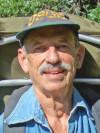
Peter W. Lipman
USGS
2021 GSA Florence Bascom Geologic Mapping Award
Presented to Fernando Flecha Alkmim & Peter W. Lipman
Citation by Humberto L. S. Reis, Sylvia Maria Couto dos Anjos, Emeritus Stephen Marshak, Almério França, and Pierre Muzzi Magalhães
Prof. Fernando F. Alkmim was born in the small, colonial town of Diamantina, within the famous Espinhaço Range of eastern Brazil. Inspired by his topographer father and the century-old diamond mining culture of his hometown, he moved to Ouro Preto in the 1970’s to begin his undergraduate studies in geological engineering at the Escola de Minas of the Universidade Federal de Ouro Preto (UFOP). The Escola was founded near ancient gold mines and in the middle of one of the most important mineral provinces of the world, the Quadrilátero Ferrífero. The school and the vibrant geological culture of his new home led Fernando to complete the undergraduate course with honors. In 1978, a year after he graduated, he was hired as a professor at the Escola de Minas to teach field geology. As was common in the Brazilian higher education system at the time, faculty started their Ph.D. studies after joining the faculty. Fernando began his doctoral research in 1983 at the Technische Universität Clausthal (TUC) in Germany. His field-based doctoral research led to one of the first detailed tectono-stratigraphic studies developed on Paleoproterozoic assemblages of the Quadriláterio Ferrífero based on modern geological concepts. This research marked the start of Fernando's outstanding research and teaching career.
With the aid of Brazilian governmental grants and a cooperative agreement between his department and the oil and gas company PETROBRAS S.A., Fernando advised dozens of field-based graduate theses and dissertations in the fields of structural geology, stratigraphy, and tectonics between 1990 and 2000. These studies supplemented his own field surveys and led to remarkable advances in the understanding of Brazilian sedimentary basins, and also led to the publication of the first detailed structural maps and cross-sections of the São Francisco craton and its sedimentary cover. Fernando’s work, which involved field analysis and the structural mapping of large areas, helped to establish a basis for the current understanding of the craton’s architecture and its interaction with Brasiliano/Pan-African orogens, as well as of the craton’s influence on the evolution of superimposed onshore and offshore sedimentary basins. In the 1990’s, Fernando published multiple seminal papers addressing the Archean to Paleoproterozoic tectonic evolution of the Quadrilátero Ferrifero. He collaborated in his research with geologists from other Brazilian universities, Brazilian oil and mining companies, and researchers from other countries including the USA, South Africa, and Germany. Results of these studies serve as milestones in understanding iron ore- and gold-bearing provinces, as well as of Archean-Proterozoic tectonics, particularly the character of dome-and-keel structures. The extensive field and structural mapping campaigns that Fernando conducted with colleagues and graduate students led to publication of the first detailed tectonic map of the late Neoproterozoic-early Paleozoic Araçuaí-West Congo orogen (2006). Combined with the research and concepts developed by colleagues, his work unraveled the tectonic evolution of a unique archetype of confined orogen preserved in the geological record, which developed in the core of the West Gondwana supercontinent. It also revealed the unusual “nutcracker tectonics” and post-collisional collapse processes leading to the final tectonic architecture of a confined orogen. His field-based work also supported significant improvement in the understanding of Precambrian sequence stratigraphy, fold-thrust belts, and basin tectonics.
From 2000 onward, Fernando’s contributions, together with those of his students, were incorporated into multiple local, regional, and official geological maps. Notably, in 2004, his work aided in development of a new geological map depicting the state of Minas Gerais, coordinated by the Brazilian Geological Survey and the Companhia Mineradora de Minas Gerais (COMIG). Geological maps produced by national and international geological surveys and universities, such as the Tectonic Map of South America, also incorporate Fernando's field-based tectonic concepts. Numerous hydrogeological and geomorphological studies in southeast Brazil have also benefited from his work.
Fernando is one of an increasingly rare cadre of geologists who can incorporate the perspectives of geophysics, petrology, geochemistry, stratigraphy, sedimentology, and structural geology into his teaching and research. His contributions as a mentor of the next generation of geologists is unsurpassed. He has guided a great many undergraduate and graduate students into an appreciation of field mapping, and has helped them to develop the geological intuition that only careful study of field relations can provide. The value of his guidance is clear in the 77 field- and mapping-based undergraduate, masters, doctoral and post-doctoral theses that he has advised. In 2004, the Brazilian Geological Society recognized Fernando’s outstanding teaching skills in field geology, structural geology and tectonics by awarding him the Henri Gorceix Gold Medal. Fernando now holds the title of professor emeritus at UFOP. He continues to advise graduate students, publish papers and reports, advise national research agencies, serve as a member of editorial committees, and provide peer reviews for major journals.
In summary, over four decades, Fernando's distinguished career has addressed various first-order research questions and contributed to the development of multiple geological subjects. These include craton and Precambrian tectonics, the behavior of fold-thrust belts, formation and inversion of sedimentary basins, the assembly of the West Gondwana supercontinent, the evolution of the South America platform, and the mineral and petroleum systems of its sedimentary basins. Fernando's remarkable knowledge and understanding of geology is represented by his publications: 82 research papers (either containing or based on detailed structural maps and cross-sections), 26 book chapters, an edited book, talks at national and international conferences and workshops, and numerous field trip guides and field courses. He has generously shared his talent for deciphering the workings of planet Earth based on clues embedded in its bedrock skin with a new generation of geoscientists. For his many remarkable contributions, Prof. Fernando F. Alkmim certainly deserves to join the distinguished list of geologists who have received GSA's Florence Bascom Award.
Video Response by Fernando Flecha Alkmim
Citation by Ren Thompson and Amy Gilmer
A pioneer in field interpretation of complex volcanic terranes for over fifty years, Peter W. Lipman has served the geologic community through integrated geologic mapping based interpretive studies of the western continental United States and Hawaii. His field mapping and study of silicic caldera systems in Nevada, Colorado, New Mexico, and Arizona have informed our understanding of how these systems develop and evolve. Peter’s maps have had major societal implications for volcanic hazards, geothermal resources, and the formation of hydrothermal ore deposits. He has mapped numerous caldera systems in the Southern Rocky Mountain volcanic field and has established a benchmark for linking magmatic process studies and modeling to geologic map constraints. His associated interpretive publications are vast and demonstrate the commitment to honoring fundamental field observations. This mapping legacy has afforded tremendous opportunity for targeted research in volcanology, petrology, ore deposits, and tectonics.
Response by Peter W. Lipman
I’m deeply grateful to the Geological Society of America for the Florence Bascom Award, named for the first woman scientist hired by the U.S. Geological Survey; it recognizes the core element in my career-long efforts to explore volcanic-eruption and magma-generation processes. Among several other awards from the Geological Society, I will especially treasure this one. Ever since William Smith published his map of England 1815, geologic mapping has provided the critical foundation for any study of earth processes.
Marvelous new analytical techniques for the study of volcanic rocks have been developed during my scientific career of the past 60 years, including high-precision geochemistry by micro-analytical methods, isotope geochronology, paleomagnetic polarity measurements, and geophysical methods to image subsurface features, but none of these can be applied reliably for process-oriented research unless the stratigraphic sequence and structural relations among sampled units have been determined reliably. Geologic mapping of appropriate rocks units, at suitable scale, provides the prerequisite underpinning for any associated geochronologic, petrogenetic, or geophysical investigations. As recognized by this award, making a geologic map is not an end product but rather the essential basic framework for improved understanding of geologic processes and concepts.
Geologic mapping is not a routine exercise; it is an art as well as science. So much of the geologic record is concealed or lost to erosion; available time typically does not permit examination of every available outcrop. Insightful intuition can be an important supplement to observation. Obtaining reliable interpretations from field study is detective work; rather like recognizing the picture image in a jigsaw puzzle from which most of the pieces have been lost. But a special delight for me in mapping a new area, where much is unknown, has been being on one’s own in the mountains, with a map and notebook, hammer, handlens, and compass. So much can be learned, with only these minimal tools and most importantly a perceptive human brain. I’ve been incredibly fortunate to be able to study volcanic rocks in ten states of the USA, as well as Japan, Russia, and Mexico, mostly in places of scenic delights as well as scientifically fascination. What a special privilege!
I grew up in an 18th C farmhouse in southern New England, where the only rocks to be seen were glacially transported boulders, many from the Canadian shield, that had long been used for stone walls at margins of long-abandoned farmland fields. I was totally unaware of earth sciences as a topic of any interest, until starting technical rock climbing at college with fellow undergrads like Eric Cheney, who were majoring in geology. These interactions provided an initial hint of a possible career that could combine strenuous physical and intense mental activity with travel to scenic parts of the world. Before a fascination with geology took hold, I had been heading toward an undergraduate degree in American history, and I still consider myself primarily a rock historian. My transformation into a competent field geologist began during a wonderful summer as assistant to USGS mineral-deposit researcher Ben Leonard, who taught the basic field methods I’ve used ever since. At Stanford University as Bill Dickinson’s first grad student, rather amazingly I was allowed to start dissertation research after only two quarters of graduate study. Classroom studies had seemed a necessary chore, but the three summer of mapping, entirely by backpack in the scientifically spectacular and roadless Trinity Alps of northwestern California, activated an enthusiasm for field-based research that has continued to the present.
My special thanks for this nomination to Ren Thompson and Amy Gilmer, delightfully bookended as the first and the most recent among USGS postdocs who have collaborated with me. Also, my deep appreciation to the many summer assistants who have provided support and friendship during mapping projects. These have included Olivier Bachmann, Russ Burmester, Chris Huber, David Johnston, Gary Lofgren, John Pallister, David Sawyer, and Andea Sibisa. My geologic map work would also have been of far less significance if it had not provided the framework for interpretive studies developed and published in collaboration with more than 130 coauthors at the USGS and academia during the past 60 years. To list just a few of my most insightful collaborators: Shigeo Aramaki, Phil Bethke, Bob Christiansen, Michelle Coombs, Greg Davis, Mike Dungan, Cary Gazis, Jon Hagstrum, Ken Hon, Clark Johnson, Slava Kovalenko, Bill McIntosh, Jack Lockwood, Jim Moore, Tom Steven, Patty Weston, and Matt Zimmerer. Finally, whatever I’ve accomplished geologically could not have happened without the unending support by Bev, my tolerant companion and wife for 59 years.